
 Maarij Ali Tarar
Introduction
When the British first came to the Indian subcontinent, the picture they had of the region was that of a civilisation locked in stasis. They saw India as a society insulated from its neighbours by the great mountains of the Himalayas and the Karakoram. They believed that this insulation had essentially frozen Indian culture in a state of pre-modernity, leaving it incapable of matching the fresh ardour and vigour of the marauding colonisers.
This idea of the unchangeability of Indian society found expression in the works of Orientalists such as James Mill and William Jones (Buono 2025). The popular image of Indian resistance to the British consists of masses of disorganised infantry accompanied by hordes of cavalry and tied down by lumbering artillery trains, emblematic of the “static and closed to change” nature of Indian civilisation (Buono 2025). What else could be expected from a region that had been so late in adopting gunpowder weaponry?
In truth, this unflattering portrait, which has bled into post-independence historiography as well, masks the dynamism and vitality of South Asian civilisation. Nowhere is this dynamism more evident than in the military arts. The science and craft of the projection of organised and armed force had been honed to a keen edge in South Asia, in much the same manner as it had been throughout the world, and this edge was best exemplified by its engagement with gunpowder technology.
A Late Arrival
It is true that gunpowder weaponry arrived late in India; gunpowder was first invented in China in the 13th century, and possibly also in Europe at the same time (Khan 1996, 27-29). From there it took its time getting to India, moving through different mediums and channels of entry over the centuries until it became thoroughly integrated with the art of war of Indian polities. However, the story of gunpowder, nay, the journey of gunpowder to India and how it was adopted and adapted there, lays bare much of the colonial (mis)conceptions about the people over whom they ruled.
The Gunpowder Age occurred between the 13th to 20th centuries when gunpowder weapons such as cannon and muskets spread across the world and became established as the primary weapons of most empires. At this time, the Indian Subcontinent was home to one of the most powerful polities of the entire world, the Mughal empire (1526-1857). Marshall Hodgson and William McNeill, two eminent historians of Islamicate civilisation and gunpowder technology, counted the empire of the Great Mughals among the Islamic Gunpowder Empires, polities whose rise and continued dominance was linked intrinsically with the adept use of gunpowder weapons such as cannon and muskets (Hodgson 1974, 16-18; McNeill 1982, 95 & 98; Khan 2004, 1-2).
But how exactly did gunpowder and firearms first reach India?
This is a question that has not been studied as extensively as it ought to have been. The commonly supplied answer is that it was Zahiruddin Muhammad Babur (r. 1526-30), the first and founding emperor of the Mughal empire, who introduced gunpowder weapons to the Subcontinent with his epochal victory over Sultan Ibrahim Lodhi of the Delhi Sultanate at the First Battle of Panipat (1526).
The statement is not wholly untrue, for Panipat was indeed one of the first instances of gunpowder weapons being used in a pitched battle on Indian soil (Khan 1991, 382), but such weapons had a rich history that considerably predated Babur’s invasion.
Indian historian Iqtidar Alam Khan, a luminary of Aligarh University, is the leading authority on gunpowder and firearms in the South Asian context. Based on the observations and conclusions of his monographs and papers, I’ve attempted the following analytical timeline of gunpowder weaponry. As we shall see, India freely tinkered, adapted and moulded the technology that it adopted, assisted by the fact that it was a very well-connected node in early-modern maritime trade networks and enjoyed dynamic contact with its neighbouring polities, thus upending the narrative of a passive consumer of foreign technology and replacing it with that of an actively engaged civilisation.
The Role of the Mongols (1226-1351)
China and Europe were the two leading lights in the arena of early gunpowder development in the late Middle Ages and it was the former from which this technology arrived in India (Khan 2004, 2-4). The Jin Dynasty (1115-1234) of China had achieved a rise in the portion of nitrate in gunpowder that made explosions and detonations possible by 1230 in the middle of the Mongol wars of expansion (Khan 2004, 2; Khan 1996, 30). Over the course of the 13th century a number of effective (albeit crude) gunpowder weapons were developed, namely (Khan 1996, 31-35):
- Huo pao – a catapult-like contraption outfitted to throw grenades and incendiary shells
- Huo ch’iang – a long bamboo tube filled with explosive powder that could presumably fire projectiles
- Tu huo ch’iang – a deadlier more robust version of the huo ch’iang that could throw flames and bullets
- Pao chang – fire crackers
According to passages from the Tarikh-e-Jahan Gusha of Alauddin Juwaini (1226-83) and Jami al-Tawarikh of Rashiduddin Fazlullah (1247-1318), two important chronicles of the Mongol conquests, the Mongols adopted these weapons from the Jin Dynasty and used them in their expansionary wars outside of China, especially in the Middle East (Khan 1996, 35-39). The Mongols also launched several raids into the Indian Subcontinent and the question that thus arises is whether they utilised gunpowder weapons on these incursions.

The dominant polity in India at this time was the Delhi Sultanate (1206-1526) and the numerous texts that describe the Mongols’ incursions against the Sultanate in the 13th and 14th centuries do not explicitly mention firearms but there is, nevertheless, some very important indirect evidence available.
By 1300 the Mongols were considered experts in the art of ‘fire-throwing’ (Khan 1994, 195 & 197). The most substantial evidence for this lies in the Khazain al-Futuh of Amir Khusrau, a historical chronicle of the Delhi Sultanate period. In the section narrating the siege of Ranthambor (1301) by Alauddin Khilji (r. 1296-1316), the ruling sultan of the Delhi Sultanate, it is noted that the Rajput defenders of the fortress were joined by Mongol deserters. They brought with them skills pertaining to the use of the crude firearms described above. In particular, it seems these Mongols were using huo ch’iangs for the defence of the fortress; references are made to flame-throwing and fiery projectiles (Khan 1996, 39-42; Khan 1994, 195-97).
Further evidence lies in the fact that both the Delhi Sultans, Balban (r. 1266-87) and Alauddin Khilji, embarked on extensive fortress-renovating projects in the face of the Mongol assaults. The fortifications of important cities such as Bhatnir, Lahore and Delhi were rebuilt while the defences of the majority of urban communities in the northwest, down to the village level, were rejuvenated. Such a major overhaul in the northwestern defences suggests that the Mongols possessed advanced technology that had rendered the previous fortifications obsolete (Khan 1996, 42-43; Khan 1994, 198).
If this evidence is set in the context of the Mongols’ extensive use of gunpowder weapons in China and Iran, it appears plausible that they also utilised them in the Subcontinent. This would mean that the Mongols were the major vector of entry for gunpowder in India, though there were other channels and mediums too.
Similarities between Sanskrit texts and Chinese texts on the making of gunpowder indicate that the former was drawing on the latter for information (Khan 1996, 43; Khan 1994, 198). Overland links between Assam and China through Burma and maritime contacts between peninsular India and China also facilitated the transfer of gunpowder technology from China to India (Khan 1996, 43-44; Khan 1994, 198).
It can be surmised from this that gunpowder technology may have entered the Indian Subcontinent in the late 13th or early 14th century. At this point, though, proper cannon and muskets had not yet been developed and the existing weaponry was crude and cumbersome, lacking accuracy and safety and suffering from slow reload times (Chase 2003, 23-26). As a result, firearms were not the game-changers that they would later become.
Proliferation of the ban
Although gunpowder weaponry did not initially gain traction with most Indian polities due to the aforementioned problems (i.e. lack of accuracy, slow reloads), there was one exception: the rocket or ban, as it was known in India.
The ban was a relatively simple weapon but quite deadly when used in large numbers. It consisted of a 1-foot-long tube filled with combustible material attached to a 10-12 feet long bamboo rod. It was designed in such a way that once the tube was ignited it could fly like an arrow up to a distance of 900 metres before exploding, causing considerable carnage (Khan 2004, 23-24).
As was the case with earlier gunpowder weapons, the rocket was originally a Chinese invention and arrived in India through the Mongols (Khan 2004, 23 & 26). Although in other regions such as Europe, western Asia and even China it fell out of use with the advent of proper firearms, in India the ban remained a viable weapon of war down to the 18th century (Khan 2004, 29). It should also be noted that initially it was known as tir-e-hawai and ban was a later name.

Part of the reason for the ban‘s widespread use in the Subcontinent was its massive range that was far greater than those of cannon or muskets. This was the result of the use of metal in the crafting of the tube, rather than other materials. Bans were also very handy and portable owing to their light weight; hundreds or even thousands could be carried on a comparatively small number of camels or carts. Lastly, they did not have any recoil which made them easy to use, especially in riverine warfare (Khan 2004, 29).
Bans proliferated towards the end of the 14th century. The rulers of Delhi, Gujarat, Malwa, Mewar and Jaunpur all made extensive use of them and in 1368/69 the Bahmani Sultanate in the Deccan region established a karkhana-e-atishbazi (i.e. an arsenal of bans and pyrotechnic devices) that subsequently became the ‘backbone’ of its army (Khan 2004, 23; Khan 1981, 154-58).

Developments in the 15th Century
Even as the Delhi Sultanate held sway in northern India, peninsular India was largely divided between the intensely antagonistic polities known as the Bahmani Sultanate (1347–1518) and Vijayanagara (1336–1646). The spread of gunpowder technology rapidly picked up pace among these and smaller polities in the 15th century with cannon, mines, bans, and mortars all finding wide use in the wars of the later part of this century.
The majority of the evidence regarding this phenomenon is furnished by four geographically diverse Persian language chronicles written in the late 16th and early 17th centuries, these being the Tabaqat-e-Akbari, Burhan-e-Masir, Tarikh-e-Ferishta and Mirat-e-Sikanderi. When corroborated by contemporary sources and each other, their accounts for the 15th century are considered valid and quite helpful in discerning the development and usage of firearms (Khan 1981, 158-59). Keeping in mind this methodology, the following are the earliest verifiable accounts of the usage of proper firearms in the Indian Subcontinent.
- Rana Kumbha of Mewar supplying two cannons to an ally and also using them to defend Chittor from the invading army of Malwa, both in 1442-43 (Khan 1981, 163).
- Mehmud Khilji of Malwa using a cannon during the siege of Mandalgarh in 1456 (Khan 1981, 162-63).
- Mehmud Gawan of the Bahmani Sultanate using a cannon at the siege of Machal in 1470 (Khan 1981, 163).
- Mehmud Beghara of Gujarat using firearms during the campaign against the pirates of the Gulf of Cambay in 1472-73 (Khan 1981, 162).
- Muhammad Shah III of the Bahmani Sultanate using firearms against Vijayanagar and the minister Mehmud Gawan using a cannon in the siege of Belgaum, both in 1472-73 (Khan 1981, 162; Khan 2004, 31-32).
- The introduction of muskets and the preparation of pyrotechnic manuals in Kashmir under Zainul Abidin (r. 1422-72) (Khan 1981, 162).
- Mehmud Beghara using a cannon in the siege of Champanir in 1484 (Khan 1981, 162).
Textual evidence is supplemented by an illustration that depicts two small cannons being fired from a fortress wall in Agra in the Delhi Sultanate during Sikander Lodhi’s reign (r. 1489-1516) (Khan 1981, 159).

The cannons (known as kaman-e-rad) and muskets used in these campaigns were of rather low quality but it is evident they were effective in operations. As Iqtidar Alam Khan asserts, “The destructive capacity of gunpowder artillery of fifteenth century, notwithstanding its primitive nature was vastly greater than that of the mechanical devices of the earlier period” (Khan 2005, 55). It is notable that they were mainly used in sieges against fortifications since they lacked the mobility and accuracy that would allow them to be used successfully in pitched battles.
A final kind of gunpowder weaponry also made its mark on the Subcontinent in the 15th century: the mine. Mining was a siege technique that involved the invading forces digging underneath the walls of the besieged fortification causing them to collapse and it had been known in India since the Timurid invasion of 1398. The ruler and founder of the Timurid empire in central Asia, Temur (r. 1370-1405), used mines during his sieges of Bhatnir and Meerut (Khan 2004, 31).
At that point, however, gunpowder had not yet been integrated with the process. The first known use of gunpowder mines by an Indian power is by Mehmud Gawan, a prominent minister of the Bahmani Sultanate, when he used them to blow a breach in the walls of Belgaum in 1472 (Khan 2004, 31-32). Even then the technique did not gain popularity until it became a modus operandi of Mughal armies from the time of Emperor Akbar’s siege of Chittor in 1567.
The origin of all these weapons lies towards the northwest of India in the aforementioned Timurid empire (1370-1507) which in turn obtained them from the Ottomans, Europe and China. Of course, it must be kept in mind that the Timurids had replaced the Mongols as the Subcontinent’s uneasy northwestern neighbours.
The later part of the 15th century thus saw the spread and usage of gunpowder and firearms on a larger scale in India, especially in siege operations. Towards the south, peninsular India with its maritime links with China and the Ottomans served as an important conduit for the inflow of gunpowder technology and it is here that we turn our focus.
The Goa Arsenal
Peninsular India had witnessed substantial use of gunpowder weapons, such as in the wars of the Bahmani Sultanate, owing to its central position in trans-Asian maritime trading networks. However, it must be remembered that Indian polities were not just passively consuming imported gunpowder weapons; they were actively experimenting with and remoulding these technologies in their own context. This phenomenon is best typified by the gunsmithing tradition of Goa.
During the early 16th century, Indian craftsmen, especially in the Deccan, had achieved high levels of proficiency in the making of muskets, cannon and other gunpowder weapons. Their own expertise was enhanced by the influx of Mamluk, Ottoman and Portuguese specialists. The Bahmani Sultanate primarily obtained their weapons from the former two polities through trade (Eaton and Wagoner 2014, 12-13).
This process was boosted in the aftermath of the naval Battles of Chaul (1508) and Diu (1509), fought between the Ottomans and Portuguese in the Arabian Sea, when Portuguese guns and Ottoman and Mamluk gunners and gunsmiths made their way into the Deccan to escape the carnage. The integration of all these new methods and skillsets into the existing firearms industry gave rise to a unique and highly advanced style of gunsmithing that has come to be known as the Indo-Portuguese tradition of weaponry (Eaton and Wagoner 2014, 14-17).
This synthesis was typified by the arsenal of Goa. After conquering the city in 1510, the Portuguese conquistador Afonso de Albuquerque (d. 1515) was so impressed by the quality of gunsmithing he found there that he sent samples of heavy cannon made by Muslim technicians back to his homeland, along with a letter to the King of Portugal praising their proficiency in the craft:
“I also send your highness a Goan master gunsmith; they make guns as good as the Bohemians and also equipped with screwed in breech plugs. There he will work for you. I am sending you some samples of their work with Pero Masquarenhas.” (Eaton and Wagoner 2014, 1)
The matchlock muskets were of similarly high standards and Albuquerque considered them to be superior to the best muskets being produced in Europe at that time, stating that the Indian gunsmiths were, “our masters in artillery and the making of cannons and guns, which they make of iron here in Goa and are better than the German ones.” (Eaton and Wagoner 2014, 17)
The techniques and weapons of the Indo-Portuguese tradition, developed by Indian craftsmen, were disseminated by the Portuguese throughout their Asian holdings as far away as Japan and even back to Europe. Indian military engineers were at the forefront of innovation and gunsmithing in the 15th century. As Richard Eaton, an eminent historian of Islamicate India, describes the phenomenon:
“Albuquerque’s statement should serve as a corrective to the conventional image, tirelessly reinforced in history textbooks, of Europe as the undisputed font of military technology in the early modern era, and of the rest of the world as passive recipients of European technology. To the contrary, what we see here are gunsmiths in the western Deccan who had already assimilated earlier firearms technologies from Turkish and Portuguese sources, had amalgamated these traditions with their own, and were now transferring technologies in precisely the opposite direction, from India to western Europe.” (Eaton and Wagoner 2014, 17)
It is thus quite clear that Indian craftsmen achieved and maintained high levels of proficiency in the art of gunsmithing, operating on the cutting edge of technological development for military uses.
The Battle of Raichur (1520)
The preceding developments and slow spread of gunpowder technology, spanning multiple centuries, ultimately culminated in the Battle of Raichur (1520). This engagement, fought between rival polities of Bijapur (1490-1686), a successor state of the Bahamani Sultanate, and Vijayanagara in southern India, witnessed the first widespread use of cannon and matchlock muskets on an Indian battlefield.
While the exact tactical details of the combat at Raichur risk bogging this essay down, a general overview of the flow of the battle and consideration of the armaments of the opposing forces is essential to our understanding of the story of gunpowder technology in India.
Krishna Raya (r. 1509-29), the Raja of Vijayanagara, invaded Bijapur with the intention of capturing the fortress of Raichur. His army reportedly numbered 27,600 cavalry and 553,000 infantry, including matchlockmen and ‘several cannons’ (Eaton 2009, 301). The fortress he intended to reduce contained a garrison of 8,400 soldiers and 20 war elephants. Of special interest to us is the fact that Raichur was bristling with gunpowder technology: 200 heavy cannons and many smaller ones were mounted on the walls of the fortress-city (Eaton 2009, 302).
Kirshna Raya’s siege of the city continued for three months until Ismail Adil Khan (r. 1510-34), Sultan of Bijapur, marched to its relief in May. Ismail brought with him a great deal of ordnance to the battle; 400 heavy cannons and 500 small cannons were counted after the battle, implying that the Bijapur forces had brought more than 900 artillery pieces to the confrontation (Eaton 2009, 302-03).
On 19 May, the two armies squared off on the southern bank of the Krishna River. Ismail Adil Khan, having crossed the river to the south, opened a fearsome bombardment of the Vijayanagara forces. When their front lines broke, he followed up the bombardment with a rapid assault on the enemy that almost proved decisive. In response, the desperate Krishna Raya rallied his greater numbers and counterattacked, ultimately succeeding in driving back the Bijapur forces to the riverbank and causing horrific slaughter among their ranks. Penned between Krishna Raya to his front and the Krishna River to his rear, Sultan Ismail Adil Khan barely escaped with his life (Eaton 2009, 302-03).
Following his crushing victory, Krishna Raya resumed his siege of Raichur which he captured within the month thanks to the help of 20 Portuguese mercenaries wielding the latest matchlock muskets of the Goa arsenal (Eaton 2009, 304-05). This was the 16th century and as already mentioned the Portuguese had already established a foothold in Goa, which had become the site of a thriving gunpowder arsenal producing hybrid cannon and matchlocks mixing the craft of Ottoman, Portuguese and Indian gunsmiths.
As perhaps the earliest major campaign to witness the use of large numbers of gunpowder weapons in the Subcontinent, the Raichur campaign serves as a window into the tactical frameworks surrounding gunpowder technology. As such, a number of important conclusions can be drawn from it. First, while cannons were installed on the walls of Raichur to augment its fortifications, the mechanism of swivels had not yet been developed, leaving them immobile and unable to shoot at targets at awkward angles, such as immediately below them (Eaton 2009, 304-05).
Second, the mere presence of cannons and muskets was not completely decisive in determining the outcome of the campaign. As Richard Eaton notes, “In short, cannon appear to have made a noticeable appearance at Raichur, but they were not yet sufficiently effective as to play a decisive role in the outcomes of military engagements. After all, in Nunes’s account, Isma‘il possessed and used significant firepower in the battle by the Krishna river, yet he still lost that battle.” (Eaton 2009, 304)
Finally, while both Bijapur and Vijayanagara deployed gunpowder weapons during the campaign, Bijapur appears to have made more thorough use of them as both field pieces and fortress defense works. The Vijayanagara forces, in contrast, made minimal use of them, with their primary siege technique being picking apart the foundations of Raichur’s walls using pickaxes rather than heavy cannon or explosive mines (Eaton 2009, 309-10).
Babur’s arsenal
The final stage in the adoption of firearms was the invasion of Babur, the Timurid ruler of Kabul, in 1526 with an arsenal of gunpowder weapons consisting of (Khan 1995, 438-42):
- Kazan – a heavy mortar
- Zarb-zan – a light cannon similar in design to the kazan
- Firingi – a light cannon, likely of European origin and perhaps similar to the Chinese fo-lang-chi Chhung cannon
- Tufang – a matchlock musket

The importance of Babur’s invasion in 1526 was not just that he supplanted the Delhi Sultanate and the Sisodia Rajputs but also that he successfully used firearms in a set-piece battle for the first time in Indian history. Adopting the basic battle plan of the Ottomans featuring wagons protecting the immobile cannon and vulnerable musketeers from the enemy cavalry, he made some of his own changes to it and created a battle-winning formula. Babur utilised his method against the Delhi Sultanate at the First Battle of Panipat (1526) and against the Rajputs at the Battle of Khanwa (1527), emerging supremely successful in both encounters.
Following his death in 1530 the various polities of northern India realised the effectiveness of this new method and an effective arms race began between them with the goal of obtaining the best firearms in the greatest quantity available. In southern India too the existing arsenals were supplemented with the latest firearms in the market. Such an environment of cut-throat competition fueled innovation and development in gunpowder technology that led to the overhaul of the martial apparatuses of several kingdoms in favour of firearms. The result was that the Indian Subcontinent firmly entered the gunpowder era and never looked back.
Conclusion
These are the conclusions of Iqtidar Alam Khan, wrought with painstaking philological study of a very wide range of textual and archaeological evidence. To recap the timeline we have just constructed, the late 13th and early 14th centuries witnessed the influx of crude Chinese-style gunpowder weapons through the Mongol incursions, supplemented by direct transfers from China via both overland and maritime routes. In the remainder of the 14th century, the rocket or ban rose to prominence among the arsenals of various South Asian polities.
The next major phase of gunpowder adoption saw the usage, in fits and starts, of early forms of cannon and muskets over the course of the 15th century. Albeit, these were restricted primarily to siege operations due to inherent deficiencies in mobility, safety and accuracy. Gunpowder mines were also adopted as a siege weapon in this phase.
The final phase in the late 15th and early 16th centuries can be understood as an impulse to overcome these technical deficiencies and obtain or develop effective gunpowder weapons. The most advanced manifestation of this impulse was the arsenal at Goa, which was producing cannon and muskets of the highest quality, renowned the world over. The efficacy of these weapons was on display at the pivotal battles fought at Raichur and Panipat, both being destructively visible demonstrations of the power of cannon and muskets in open battle.
Furthermore, it is pertinent to circle back to our initial contention with the Orientalist view of Indian stagnancy. As we saw in this brief snapshot of a journey from 1230, when military-grade gunpowder became widespread in China, to 1526, when gunpowder weapons became a staple of South Asian warfare, India had been anything but static and unchangeable.
From remodelling the ban to fashioning muskets that awed European conquistadors, South Asian generals and gunsmiths consistently moulded gunpowder weapons to the needs of their particular context. Once cannon and muskets had been demonstrably vindicated on the battlefield at Panipat, the result was an arms race unlike anything that had been seen so far as various kingdoms and empires fought to get their hands on the destructive new weapons and the gunsmiths who forged them. But that is a topic for another article.
What are your thoughts? Do you agree with his assessment? For those who wish to undertake further study on the matter, Iqtidar Alam Khan’s bibliography would be a fine place to start.
Bibliography
Buono, Eleonora. “The Driving Force of Progress: National Character, Government, and Civilization in James Mill’s Political Thought.” The Review of Politics 87, no. 4 (2025): 483–504. https://doi.org/10.1017/S0034670525100065.
Chase, Kenneth. Firearms: A Global History to 1700. Cambridge: Cambridge University Press, 2003.
Eaton, Richard, and Philip B. Wagoner. “Warfare on the Deccan Plateau, 1450-1600: A Military Revolution in Early Modern India?” Journal of World History 25, no. 1 (March 2014): 289-313.
Eaton, Richard. “‘Kiss My Foot,’ Said the King: Firearms, Diplomacy, and the Battle for Raichur, 1520.” Modern Asian Studies 43, no. 1 (January, 2009): 289-313.
Hodgson, Marshall. The Venture of Islam: Conscience and History in a World Civilization. Vol. 3, The Gunpowder Empires and Modern Times. Chicago and London: University of Chicago Press, 1974.
Khan, Iqtidar Alam. “Coming of Gunpowder to the Islamic World and North India: Spotlight on the Role of the Mongols.” Journal of Asian History 30, no. 1 (1996): 27-45.
___. “Early Use of Cannon and Musket in India: A.D. 1442-1526.” Journal of the Economic and Social History of the Orient 24, no. 2 (May, 1981): 146-164.
___. “Firearms in Central Asia and Iran during the Fifteenth Century and the Origins and Nature of the Firearms brought by Babur.” Proceedings of the Indian History Congress 56, (1995): 435-446.
___. “Gunpowder and Empire: Indian Case.” Social Scientist 33, no. 3/4 (March – April, 2005): 54-65.
___. Gunpowder and Firearms: Warfare in Medieval India. New Delhi: Oxford University Press, 2004.
___. “The Role of the Mongols in the Introduction of Gunpowder and Firearms in India.” Proceedings of the Indian History Congress 55, (1994): 194-200.
McNeill, William. The Pursuit of Power: Technology, Armed Force, and Society since A.D. 1000. Chicago: Chicago University Press, 1982.
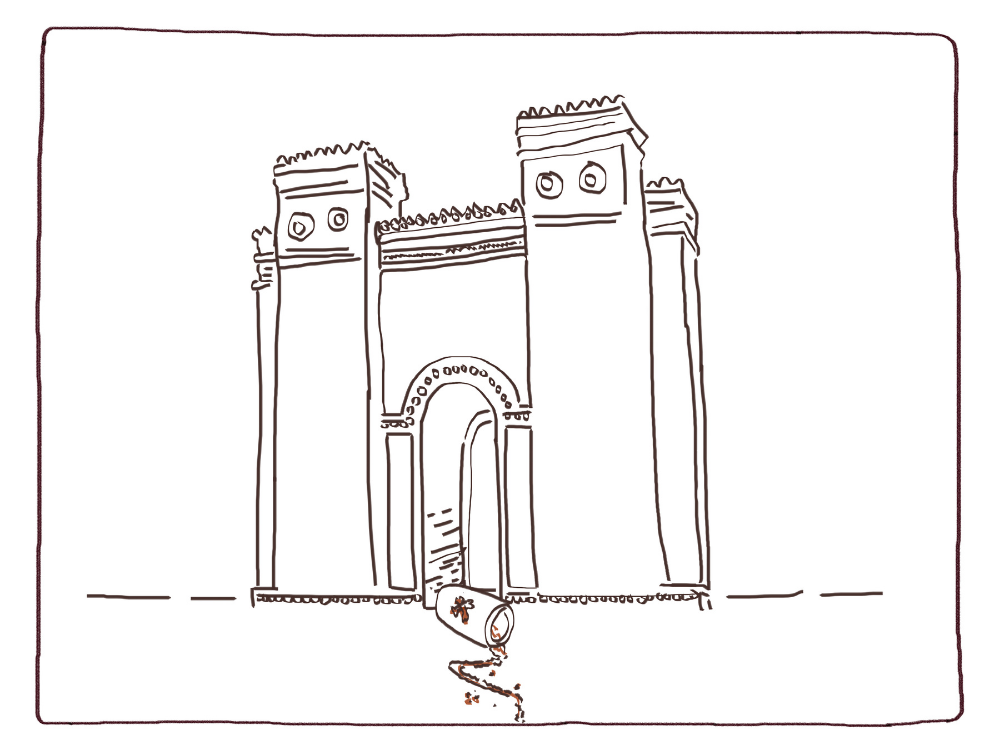
All artwork for the War Law Institute is custom-created by Alisha Yazdani. You can find her on Instagram here.

Maarij Ali Tarar
Maarij Ali Tarar is a young writer from Mandi Bahauddin who is currently studying economics at LUMS. He reads and writes about history, literature and politics. When he is not training for his next marathon or playing football, he can be found engrossed in the latest Brandon Sanderson novel. His favourite books are the Baburnama and the Shahnameh.

 N. Waheed
 Camilo Ramírez Gutiérrez
 Zaki Khalid
 Breshna Rani
 Syed Ali Zia Jaffery
 Anoshay Fazal
 Ayesha Malik
 Kamila Khan
