
 Breshna Rani
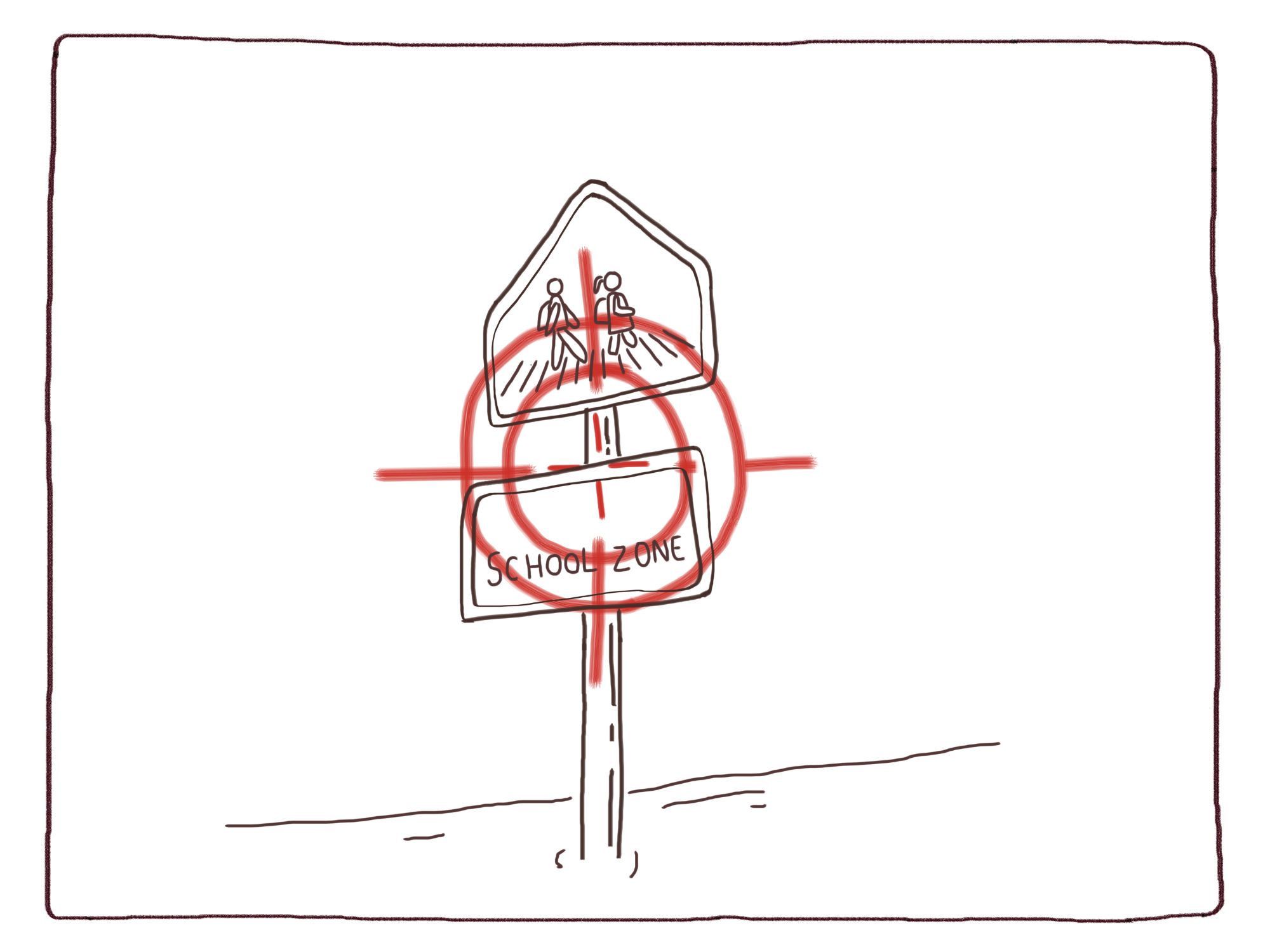
On February 28, 2026, the U.S. struck Iran and started an illegal war against the country with its ally, Israel. The initial onslaught of attacks against Iran included a devastating attack on the Sharajah Tayyebeh girls’ elementary school in Minab, Hormozgan Province. It was an ordinary school day, with girls aged 7 to 12 attending classes. Over the span of a few hours, the school was apparently struck three times, resulting in the tragic loss of at least 165 students, teachers, and parents. The triple strike on a clearly marked civilian site raises questions about the extent of precautions taken in a conflict to protect civilians.
According to the BBC, the attack would be one of the “worst single cases of civilian casualties in decades of US conflicts in the Middle East”, assuming American culpability is confirmed. However, under the law of armed conflict, if the attack was an honest ‘mistake’, it is unclear whether it would amount to a war crime. This article explores the law as it applies to the strike at the school in Minab and whether it could lead to any form of accountability.
I. Background
The Sharajah Tayyebeh girls’ elementary school was reportedly hit by U.S. Tomahawk missiles. This weapon is known for its long range, high accuracy, and large warhead, which makes it particularly effective for targeting fixed sites. Given the precision of Tomahawk missiles, the likelihood of a technical error is very low. Many analysts argue that the attack on the school may have been caused by outdated targeting data, as originally the school was part of a parallel Islamic Revolutionary Guard Corps (IRGC) naval base. However, between 2013 and 2016, it was converted into a school and had been clearly delineated, painted in bright colours, and featured a noticeable playground, making it easily identifiable from satellite imagery and online sources.
One of the initial challenges in incidents like this is determining the source of the strike. In the case of the Minab School Strike, the attack can be fairly conclusively attributed to the U.S. The Tomahawk missile is operated exclusively by the U.S in this conflict. While Israel is also part of the conflict, they don’t possess any Tomahawks, and the US was solely targeting the area where Minab School is located. Additionally, once the strike drew attention on social media and in news outlets, the U.S initiated an inquiry into the incident.
II. Laws of War and Protection of Civilians
International humanitarian law or the Jus in Bello (Latin for ‘law in war’) is a body of rules that govern how parties may act in an armed conflict. There are usually two types of armed conflicts for the purposes of applying IHL: an international armed conflict (‘IAC’) which occurs between states, or a non-international armed conflict (‘NIAC’) which occurs between a state and armed/insurgent groups, or between the groups themselves. The US-Iran war is subject to the rules of IAC, which include the Geneva Conventions of 1949, the First Additional Protocol [‘API’] and customary international humanitarian law. The requirements of humanitarian protection in times of conflict oblige each attack to undergo an assessment to distinguish between civilian and military objects, maintain a proportionate approach to avoid excessive harm, and ensure all precautions are taken before each attack.
Principle of Distinction
Article 48 of API codifies the fundamental rule of the principle of distinction: ‘Parties to the conflict shall at all times distinguish between the civilian population and combatants and between civilian objects and military objectives and accordingly shall direct their operations only against military objectives’. Article 50 of the API defines civilians as those not belonging to certain categories under Article 4 of the Third Geneva Convention, such as members of the armed forces, militias, and volunteer corps. In case of doubt, a person shall be considered a civilian and be awarded those protections.
A military target is defined as an object which by its ‘nature, location, purpose or use makes an effective contribution to military action and whose total or partial destruction, capture or neutralisation, in the circumstances ruling at the time, offers a definite military advantage’ (Article 52(2)). Many civilian objects can become military targets if used in that way, i.e., to make an effective contribution to military action, including bridges, residential buildings, hills, and even schools and hospitals.
The US Department of Defence Law of War Manual, which is the US interpretation of the laws of war and international law, states that ‘Commanders and other decision-makers must make decisions in good faith and based on the information available to them. Even when information is imperfect or lacking (as will frequently be the case during armed conflict), commanders and other decision-makers may direct and conduct military operations, so long as they make a good faith assessment of the information that is available to them at that time’ (para 5.3). The additional requirement of ‘good faith’ is a qualifier in situations where civilian objects are targeted, in that so long as a good-faith assessment is made, they do not run afoul of this principle.
Principle of Proportionality
Article 51 of API prohibits indiscriminate attacks that are not specifically directed at military objectives and that cannot be limited in their effects. Article 51(5)(b) specifically states that an attack may be indiscriminate when ‘[it] may be expected to cause incidental loss of civilian life, injury to civilians, damage to civilian objects, or a combination thereof, which would be excessive in relation to the concrete and direct military advantage anticipated’. This provision recognises that methods of warfare pose a risk to civilian lives and property. It requires that each attack be weighed against the military advantage and that the harm to civilians not be excessive; this is a fundamental principle of IHL.
Principle of Precaution
Article 57 of API states that individuals who plan or decide on an attack must take all feasible steps to verify that the targets are not civilians or civilian objects. They must also take all feasible precautions when selecting the means and methods of attack and avoid attacks expected to cause excessive civilian casualties. The principle of precaution is also an established customary rule (Customary IHL, ICRC Study, Rule 15). An important element of the principle is gathering and verifying information, as that lays the foundation for any attack and its specifics. The commentary of Rule 15 states that military commanders have to reach their decision on information from all sources available to them at a relevant time. The commentary goes on to state that ‘many military manuals stress that the commander must obtain the best possible intelligence, including information on concentrations of civilian persons, important civilian objects, specifically protected objects, the natural environment and the civilian environment of military objectives’. The requirement to obtain the best possible intelligence creates a positive obligation to seek information that actively allows a commander to know about civilians on the ground and have a full, accurate picture.
Warnings must be issued whenever possible to protect civilians and, when given, the warning method should be effective, allowing civilians to disseminate information and be aware of a potential attack. While the United States is not a party to Additional Protocol I, this provision and many others to follow are recognised as reflecting customary international law (Customary IHL, ICRC Study, Rule 10).
The ICRC’s commentary from 1987 references the Oxford Dictionary definition of ‘feasible’, which means ‘capable of being done, accomplished, or carried out; possible; practicable.’ The standard requiring a state to do ‘everything feasible’ is comprehensive but highly subjective and can have negative consequences. The US Department of Defence Manual also notes that feasible precautions are ‘those that are practicable or practically possible taking into account all circumstances ruling at the time, including humanitarian and military considerations’ (para 5.2.3.2). It also acknowledges that “mere poor military judgment (such as mistakes or accidents in conducting attacks that result in civilian casualties) is not by itself a violation of the obligation to take precautions”.
III. Applying the Fundamental Principles to the Minab School Strike
It appears that target coding by the Defense Intelligence Agency to U.S. Central Command created the targeting coordinates using outdated data “without verifying its currency against current imagery or intelligence. The result was a target package that included what was, in fact, a functioning primary school.” The Minab School Strike was a triple-tap strike, despite the school having been clearly marked as an educational institution for many years. A minimal investigation into the target would have confirmed that it was not a legitimate military target. What is particularly troubling is that some sources report that after the first strike, the children were taken to a prayer hall to protect them, and their parents were called to pick them up. However, the school was struck again two hours later. The third strike likely took place close to the prayer hall. This highlights a serious failure to take necessary precautions, given the clear and continuing responsibility to distinguish between military and civilian targets.
An investigation is reportedly underway into the attack which is examining whether the error in targeting the school was a human or AI-assisted failure. Either way, the targeting of the school seems to be an error made from using outdated maps or imagery from before 2016 when the school building was delineated from the naval compound. As a result, there was no deliberate targeting of a civilian object, or with the knowledge that civilians or civilian objects would be harmed in targeting a military objective. Therefore, neither the principle of distinction nor the principle of proportionality would come into play. This is particularly so given the US DoD Manual’s emphasis on ‘good faith assessments’ having been made. However, the principle of precaution may have been violated.
According to Article 57(2)(b) API, an attack should be cancelled or suspended if it becomes evident that the objective is not military in nature. Monitoring the school after the first strike should have made it clear that it was not a military objective. International Humanitarian Law mandates that any attack should be carried out only after the attacker has thoroughly vetted, verified, and confirmed the nature of the target. Orenstein notes that “failure to maintain current, verified intelligence before approving a strike against a fixed installation in a non-denied environment is an independent violation of Article 57’s precautionary obligations”.
Milanović argues:
What almost certainly was violated was the principle of taking feasible precautions in attack, in particular the rule requiring that a party to do the conflict must do everything feasible to verify that the targets it pursues are in fact military objectives. Any violation of distinction is essentially a consequence of failing to take all feasible precautions in attack. I just don’t see how it could reasonably be argued that the US officers who conducted this attack did everything feasible to verify that the school building was a military objective. If journalists using only open access sources could relatively quickly establish what went wrong, and trace the separation of the school from the wider IRGC compound, I’m pretty sure that the US officers, with all the tools at their disposal, could have done the same before launching this attack. This is especially because this was not some kind of dynamic target, which had to be pursued quickly upon sight of the enemy, but was likely part of long list of targets that were previously planned for in anticipation of any conflict with Iran. The US had the time, the means and the opportunity to do more.
However, Milanović goes on to argue that while there has been an IHL violation in that the principle of precaution has not been complied with, it would not be the sort of case which would ever end up before the International Criminal Court (assuming jurisdiction). He argues that this is because war crimes under the Rome Statute require intent and knowledge (in that the commander would have to have known there would be civilians there). Moreover, a mistake of fact under Article 32(1) of the Statute excludes criminal responsibility where there is a negation of the mental element of the crime, as would be the case here.
He further disagrees with the assessment of a Human Rights Watch report that criminal responsibility can be exercised for intent and recklessness, in that the commander “should have known” that there was a school there with schoolchildren inside. Milanović contends that this is a negligence standard and not a recklessness standard and even if the recklessness standard was applied, mistake of fact would exclude responsibility. This view is supported by Prosecutor v. Strugar (IT-01-42), ICTY Trial Chamber 2005 / Appeals Chamber 2008. The Appeals Chamber held that the perpetrator of the crime of attack on civilians must undertake the attack ‘wilfully’ and that the latter incorporates ‘wrongful intent, or recklessness, [but] not ‘mere negligence’.
Milanović also notes the example of the attack on the Grdelica bridge during NATO’s offensive in Serbia in 1999. In that instance, two strikes were conducted on a bridge, without knowledge that a passenger train was passing during the first strike. The second strike on the other side of the bridge hit the passenger train again, as it had moved given the impact of the first strike. In that case too, he notes the attack was likely negligent, in not being aware that a passenger train would be passing and was reckless, in taking the risk of striking the bridge again. In that case the Committee set up by the International Criminal Tribunal for the Former Yugoslavia decided not to conduct an investigation.
In this case, there appears to be a violation of the principle of precaution (and numerous aspects of it) in the initial strike on the Minab school due to the failure to maintain current and verified intelligence on the target. However, this would not amount to a war crime due to it being a mistake of fact; the school was not deliberately hit. Nonetheless, the second and third strikes on the prayer hall and nearby to it respectively, would further violate the principle of precaution, as the obligation to take ‘constant care’ to spare civilians would apply. Moreover, an added factor is whether the military commanders were aware of the outcome of the first strike. If they were aware, and they still continued with the strike, this could amount to a war crime. If they were unaware, or did not take care to assess the situation, this would further violate the obligations owed under the precautionary principle. A triple tap strike would owe a continuing obligation of care to comply with IHL. Arguably, this is enhanced if the subsequent strikes were pre-programmed, differentiating it from the Grdelica bridge strike which was not.
IV. Conclusion
The US has an obligation under customary IHL to investigate allegations of serious violations of the laws of war under Common Article 1 of the Geneva Conventions. This provision mandates that states respect and ensure respect for IHL. It appears that this investigation is currently ongoing, however, it is doing so in a worrying context. US Defense Secretary Pete Hegseth has derided “stupid rules of engagement,” has declared he is giving “no quarter” in Iran, has said Iranians are “toast and they know it”, has announced that this is not a “fair fight” because “[w]e are punching them while they’re down, which is exactly how it should be.”
Furthermore, in his book, The War on Warriors, Hegseth complained that “[o]ur boys should not fight by rules written by dignified men in mahogany rooms eighty years ago. America should fight by its own rules.” America’s own rules, indolent negligence, and over-reliance on outdated intelligence has left hundreds of schoolchildren dead. If the US wants to regain any of its reputation as a country which abides by international law, it must provide reparations for any violations of the principle of precaution committed in this instance.
All artwork for the War Law Institute is custom-created by Alisha Yazdani. You can find her on Instagram here.

Breshna Rani
Breshna Rani graduated from City, St George's, University of London with a specialisation in international law and is currently working as a civil advocate in the UK.

 Maarij Ali Tarar
 N. Waheed
 Camilo Ramírez Gutiérrez
 Zaki Khalid
 Breshna Rani
 Syed Ali Zia Jaffery
 Ayesha Malik
 Kamila Khan
