
From the Global South, imperialism, colonialism, and racism have long served as key analytical frameworks for understanding the logic underpinning many of the tools of violence employed by hegemonic powers. Within this context, statistical evidence highlights the racialised impact of contemporary military and security campaigns. The Costs of War Project at Brown University estimates that more than 940,000 people have been killed by direct violence in post-9/11 wars, with the overwhelming majority of those killed being men from Africa, the Middle East, and South Asia. In Latin America, militarised anti-drug operations – often supported, financed, or conducted by foreign armed forces – have disproportionately targeted and killed Latin American men, particularly in coastal, border, and rural regions associated with drug-trafficking routes (Human Rights Watch, 2020; United Nations Office of the High Commissioner for Human Rights [OHCHR], 2023). Although global casualty datasets rarely disaggregate deaths by race or ethnicity, human rights organisations consistently document that African and Latin American men constitute the majority of those killed in counterterrorism and anti-narcotics military operations, revealing a persistent racialised pattern of lethal force.
The use of international law has historically been shaped by racism and imperialism, and this dynamic is not merely a legacy of the past but a persistent and contemporary problem affecting the protection of human beings. The fight against so-called “narco-terrorists” has become a powerful mechanism through which the distinction between international human rights law and international humanitarian law is once again blurred and strategically exploited.
Internal violence and the limits of NIAC frameworks
While internal violence within States has been a constant feature of international relations, contemporary security discourse increasingly assumes that non-international armed conflicts (NIACs) constitute the primary internal threat faced by most States. This understanding has largely prevailed since 1949, when the four Geneva Conventions introduced Common Article 3 as a legal framework for regulating the use of force in internal conflicts. However, this categorisation captures only part of the current landscape. Internal confrontations involving guerrilla movements, paramilitary groups, and politically motivated armed actors represent just one dimension of contemporary violence. Alongside them, other non-state actors, such as terrorist organisations, private security groups, and, increasingly, criminal organisations, have acquired significant relevance in both national and international security contexts.
The behaviour of non-state actors in internal confrontations has led to serious human rights violations, prompting certain developments in international law. With regard to humanitarian consequences, the international community has sought to regulate some of these situations through international humanitarian law (IHL). This legal framework was largely sufficient during periods in which hostilities were driven by political objectives, such as the defeat of the State. Violence was exercised through relatively coherent political and military structures, and hostilities were framed within traditional notions of belligerent conduct.
However, this framework has become increasingly limited in ensuring security and fulfilling humanitarian obligations, as contemporary armed groups operate under fundamentally different dynamics. Alongside the economic transformation of illicit financial support, these groups have evolved into fragmented criminal networks composed of small cells that sometimes act collectively and, at other times, operate independently. This system is sustained by structural inequality and by a racially stratified economic order inherited from post-colonial social arrangements, in which certain individuals and populations continue to be labelled as inferior.
That point is significant for establishing what kind of violence the State will apply, how it will treat that kind of fear, and what limits or boundaries it must have. It is essential to understand the framework to assess humanitarian consequences and take action.
Regional patterns of violence and militarisation
Between 2018 and 2025, Latin America and the Caribbean remained the most violent region in the world, with homicide rates far exceeding the global average and violence largely driven by organised crime, drug trafficking, and militarised security responses. Despite representing less than 10% of the world’s population, the region has consistently accounted for approximately 35–40% of global homicides. While homicide rates temporarily declined during the COVID-19 pandemic, violence resurged in several countries after 2021, particularly along major drug-trafficking corridors. Countries such as Brazil and Mexico continued to record tens of thousands of homicides annually, while others, including Ecuador, experienced dramatic surges in violence, with homicide levels reaching historic highs by 2024–2025 due to escalating conflicts between criminal organisations and intensified militarised enforcement. Overall, criminal violence during this period disproportionately affected young men in marginalised communities and remained closely linked to transnational drug markets and punitive security strategies rather than long-term institutional reform.
In contrast, in Yemen, U.S. military involvement has resulted in a marked increase in civilian casualties, particularly in the context of counterterrorism operations. According to Airwars, between 443 and 642 civilians have been credibly reported killed in U.S. strikes since 2002, with a sharp escalation in 2025, when more than 200 civilian deaths were reported within weeks. Reuters documented mass-casualty strikes on critical infrastructure, including detention facilities where African migrants were reportedly killed. These figures underscore the growing human cost of militarised counterterrorism.
Following the second election of President Trump, the narrative surrounding the fight against criminality intensified, particularly through racialised immigration discourse and the revival of a “war” paradigm framed as the defence of America. This shift is crucial to understanding the contemporary reshaping of State practices concerning the use of lethal force in the named “War against narco-terrorism”.
Global South dynamics and blurred legal thresholds
These dynamics are not confined to the Global North. Across the Global South, security challenges are increasingly driven by criminal organisations that maintain links with non-state armed actors under IHL. In the Democratic Republic of the Congo, for example, the M23 operates as a weaponised group composed of multiple micro-structures that oscillate between participation in hostilities and engagement in illicit economic activities. In Latin America, this pattern is evident in countries such as Colombia and Peru, where NIACs have occurred and armed groups have developed hybrid forms of violence. In contexts such as Ecuador and Mexico, drug trafficking and organised crime have reshaped violence, enabling groups to reach levels of intensity that may, at times, meet IHL thresholds.
United States operations in the Caribbean Sea under the banner of a “new war” against narco-terrorism further risk undermining international legal guarantees for individuals who, under IHL, should be regarded as civilians. These practices raise critical questions regarding the durability of the international legal order and the continued relevance of humanitarian principles.
The impact of these dynamics falls disproportionately on vulnerable populations. Civilian communities, particularly poor, Indigenous, and Black populations in peripheral territories, are increasingly exposed to violence and recruitment. As a result, these groups are simultaneously positioned as both fighters and victims, deepening a humanitarian crisis that challenges the coherence of both human rights law and IHL (UN Special Rapporteurs, 2025). The UN experts in 2025 urged “the United States to immediately halt all such attacks against vessels at sea and called for comprehensive and impartial investigations into all the attacks which have occurred since 2 September 2025, including guarantees of truth, justice, and reparations for the families of victims”.
Counterterrorism, legal regression, and hybrid approaches
After 9/11, a counterterrorism framework emerged to address the terrorist threat. Although the conduct of non-state actors prompted developments in international law, these responses have proven insufficient to guarantee the rule of law. IHL was originally adequate for conflicts driven by political objectives and structured violence. Today, however, terrorist and criminal groups operate as flexible economic networks. As Kalmanovitz (2023) argues, these “criminal entrepreneurs” pursue objectives fundamentally different from those of traditional armed actors. Even when IHL thresholds appear to be met, reliance on lethal force becomes problematic due to the absence of military rationales that would justify a war paradigm.
State practices increasingly reflect a return to legal ambiguity, enabling lethal force against individuals previously considered civilians based solely on criminal conduct. This expansion of counterterrorism logic risks transforming the rule of law into a tool of authoritarian governance.
International law emerged as a response to historical catastrophes. The World Wars exposed the fragility of humanity itself. International law is therefore not merely a system of rules, but a humanistic project aimed at affirming shared human dignity beyond divisions of race, culture, or religion.
The humanitarian telos of Common Article 3
One possible response lies in a strict interpretation of Common Article 3. As a multicultural norm, it recognises and protects human diversity by prohibiting adverse distinction based on race, colour, religion, sex, birth, or wealth. The drafters understood human dignity as intrinsic to the human condition, extending protection even within NIACs.
Historically, however, humanitarian protections were unevenly applied. Even early laws of war differentiated treatment based on racial or ethnic identity, as happened with several rules in the American Civil War. The post-1949 framework sought to correct this through CA3, yet subsequent conflicts—such as those in the former Yugoslavia—demonstrate the persistence of identity-based violence.
Accordingly, the answer does not lie in abandoning existing frameworks, but in reaffirming the telos of the Geneva Conventions: reducing cruelty and protecting humanity in all armed conflicts. Contemporary challenges therefore require not a new legal order, but a renewed commitment to the foundational principles already embedded in international humanitarian law.
Conclusion: Toward a New Framework for the Use of State Violence?
In a nutshell, the central question that emerges is whether a new framework for the exercise of State violence is being constructed. Racism and imperialism may be understood not merely as isolated pathologies, but as structural conditions that generate multiple symptoms. As Žižek (2009) argues in relation to violence, objective and structural forms of violence produce criminal gangs and upper-level criminal organisations capable of eroding and ultimately breaking the rule of law. These phenomena, however, cannot be effectively addressed through repression alone. Rather, they can only be sustainably treated by the affected societies themselves through robust welfare-state policies that address structural inequality and exclusion.
State power is capable of confronting these threats only insofar as it is exercised through the guarantee of human rights and a rational, restrained use of force. Such an approach must preserve individual and collective guarantees while strictly containing the resort to lethal force. The paradox, however, lies in the fact that the very existence of organisations that deny and undermine the rule of law risks transforming the State itself into a rule-breaker. When violence without restraint is presented as the sole solution, the State mirrors the conduct of the criminal groups it seeks to suppress, thereby eroding its own legitimacy and the foundations of the rule of law.
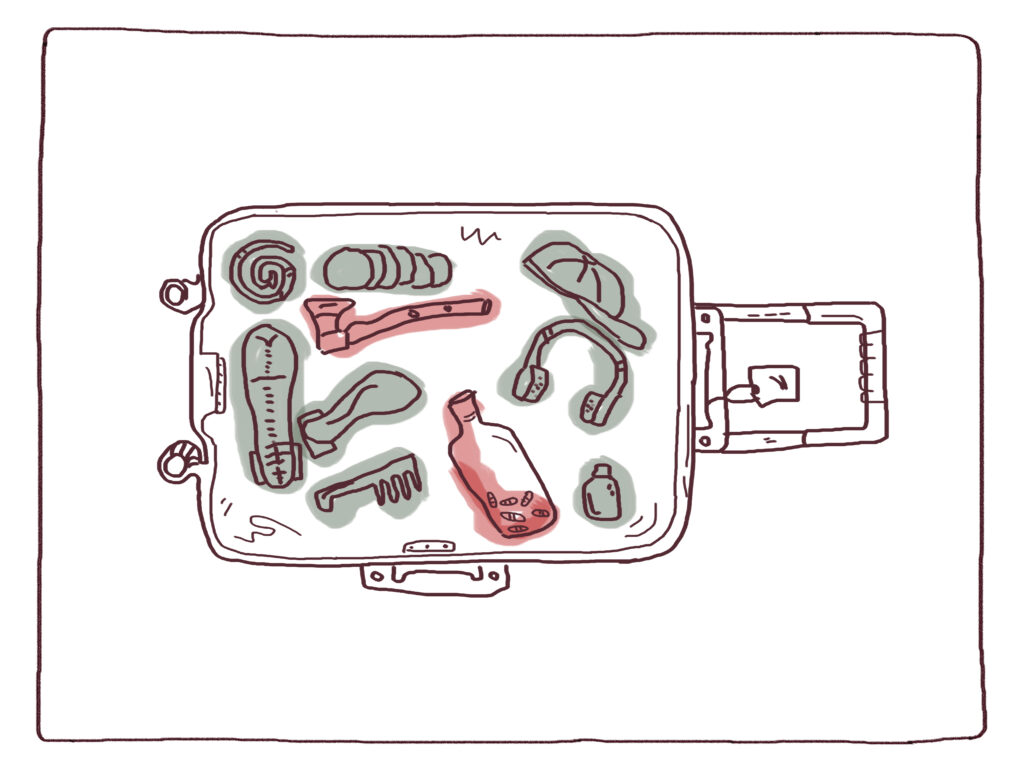
All artwork for the War Law Institute is custom-created by Alisha Yazdani. You can find her on Instagram here.