
 N. Waheed
In 2023, the Atlantic Council referred to the private sector as the “sixth domain” of warfare, making a reference and addition to the NATO doctrine which specifies five operational “domains” or “specified spheres of activity” where military involvement and critical wartime activities take place.[1] The five traditional domains include air, maritime, land, cyberspace, and space.[2]
Naming, even if informally, the private sector as a “sixth domain” serves to underscore the increasing importance and involvement of private corporations in warfare and military conduct[3] and raises questions about the mechanisms of accountability for private entities under international humanitarian law particularly when confronted with the issue of committing “atrocity crimes”[4] i.e., war crimes, crimes against humanity, genocide and ethnic cleansing.[5]
The involvement of private corporations in the facilitation of warfare has a storied history.[6] With this history comes an egregious track-record of direct and indirect complicity in the perpetuation of atrocity crimes.[7] This issue is especially salient in current times given that private corporations, especially “Big Tech” companies like Google, Amazon, Meta etc., are increasingly involved in providing States the capabilities to carry out mass atrocities against civilians.[8] What makes the involvement of these companies particularly remarkable is that they may not qualify as traditional defense contractors and have functions or services that initially were not associated with military applications.[9] However, given that the terrain of war and technologies associated therewith have evolved to include cyberspace and non-conventional or previously unbeknownst forms of warfare,[10] it warrants reevaluating the concept of international criminal liability for corporations, especially given the frequency with which their products and services are being utilized to facilitate crimes against humanity.[11]
The exploitation of gaps in international law and absence of criminal liability against corporations has allowed international bad actors to carry out gross atrocities against civilians during both inter-state and intra-state warfare.[12] Especially in instances where States have failed to act to prevent atrocity crimes, creating an enforceable regime of international criminal corporate accountability would provide a much needed deterrence mechanism that would incentivize private corporations, especially tech giants, to withdraw their products and services if a client state’s conduct exceeds what is lawful under jus in bello and international human rights law.[13]
I. ROLE OF BIG TECH IN THE FACILITATION OF ATROCITY CRIMES
“Big Tech” commonly refers to the five largest tech companies in the world, all of whom are based in the United States, namely, Apple, Amazon, Alphabet or Google, and Meta (formerly Facebook) and Microsoft.[14] Though the scope of this comment and the need for criminal corporate liability is not merely limited to these five actors, their global influence, heavy involvement both directly and indirectly in modern day armed conflicts and the misuse of their products and services in committing war crimes, crimes against humanity, ethnic cleansing and genocide makes them the best examples to illustrate the urgent need to build an international corporate accountability mechanism under international criminal law.[15]
Myanmar: Rohingya Muslim Genocide (2017)
In 2017, the use of social media as a vehicle for genocide famously came to fore with the genocide and ethnic cleansing of the Rohingya Muslim community in Myanmar by the Myanmar security forces, led by the Myanmar army (known as Tatmadaw).[16] Prior to the escalation of violence, the Rohingya Muslim community in Myanmar faced decades of state-sponsored discrimination, persecution and oppression that has been documented extensively by human rights organizations and qualified as apartheid.[17] The aftermath of the “clearance operations” conducted by the Myanmar security forces against the Rohingya in 2017 resulted in the ethnic cleansing[18] of 702,000 members of the Rohingya community.[19] Roughly 80% of the Rohingya population was forced to flee to Bangladesh as refugees or else be subjected to murder, torture, deportation or forcible transfer, rape and other sexual violence, persecution, enforced disappearance, and other inhumane acts, such as forced starvation – atrocities that constitute 9 of the 11 crimes against humanity listed in the Rome Statute of the International Criminal Court.[20] In the months leading up to the atrocities and even during them, Facebook amplified violent hate speech and vitriolic content against the Rohingya community that incited the targeting of said community through rampant misinformation and fear mongering.[21] The UN’s Independent Fact-Finding Mission on Myanmar (IFFMM) tasked to investigate the war crimes committed against the Rohingya found that “[t]he role of social media [was] significant” in the atrocities that ensued. This occurred in a context where the rapid rise to dominance of the Facebook platform in the country had meant that “Facebook is the Internet”.[22]
Far from a neutral and passive platform that failed to respond adequately to the situation of escalating violence in Myanmar, Meta’s algorithms proactively amplified and promoted content on Facebook which inflamed violence, hatred, and discrimination against the Rohingya community.[23] In 2018, following an independent report commissioned by Meta, the platform conceded that it created an “enabling environment” for the human rights abuses the ethnic group faced offline.[24] Additionally, in the aftermath of the “Facebook Papers” leaked by the Meta whistleblower, Frances Haugen, there was evidence that Facebook’s “core content-shaping algorithms” – underlying its news feed, ranking, and recommendation features – all actively amplify and proliferate violent and discriminatory content and target this content directly to people most likely to act upon such incitement.[25] The documents allege that Meta has been long aware of such risks and yet in unwilling to remedy them.[26]
Ethiopia: Tigray War (2020)
According to Amnesty International, Meta was once again involved in proliferating harmful content that resulted in heightened violence and human rights abuses in Ethiopia during the Tigray war in 2020.[27] The conflict in Ethiopia would go on to become of the biggest humanitarian crises of the last decade with rampant war crimes committed on part of all parties to the conflict.[28] The atrocities committed against civilians in the Tigray region by Ethiopian National Defense Force (ENDF), Eritrean Defence Forces (EDF), and the Tigray Peoples Liberation Front (TPLF) included murder, enforced disappearances, torture, sexual slavery, rape, ethnic cleansing and possible extermination.[29] An approximated 600,000 people became casualties of the Tigray War and the subsequent humanitarian crisis that ensued.[30] There is also a strong argument that Ethiopia and its allies intended to commit genocide against the Tigrayans.[31] In October 2023, the UN-appointed International Commission of Human Rights Experts on Ethiopia (ICHREE) noted much like IIFFMM that “[t]he prevalence of hate speech in Ethiopia, in particular online, stoked community tensions and created a climate in which individuals and groups became targets of incitement and calls to violence.”[32] The Commission also found “[t]he ongoing spread of violence, fueled by hate speech and incitement to ethnic-based and gender-based violence, are early warning indicators of further atrocity crimes against innocent civilians, especially women and children.”[33]
Even though Meta was not involved in a military capacity or as a party to the conflict in Myanmar and Ethiopia it is clear that it played an important role in the perpetuation of gross violations of human rights in contravention of international human rights law and IHL.[34] Consider the 14 risk factors and indicators which enable atrocity crimes like genocide, war crimes, crimes against humanity and ethnic cleansing to occur as elucidated by the UN in its 2014 Atrocity Prevention Framework.[35] According to the Framework “enabling circumstances” and “preparatory actions,” i.e., ”[e]vents or measures, whether gradual or sudden, which provide an environment conducive to the commission of atrocity crimes, or which suggest a trajectory towards their preparation” constitute common risk factors for the commission of atrocity crimes.[36] The “increased inflammatory rhetoric, propaganda campaigns or messages advocating hatred against protected groups, populations or individuals” on Facebook is considered an indicator that the risk of atrocity crimes is present as such actions can “create an environment that favours or even encourages the commission of [atrocity] crimes.”[37]
Israel-Palestine: Gaza (2023)
In other conflicts, Big Tech companies have been involved in a more direct military capacity. For example, in the ongoing Israel-Gaza War, which is already proving to be one of the bloodiest conflicts in recent history, Big Tech companies are directly involved in providing Israel with the technology to carry out military operations that are in violation of IHL.[38] In just a year, it has been estimated that more women and children have been killed in Gaza than in any other conflict over the last two decades.[39] On top of the heavy civilian casualties, protected spaces under international humanitarian law such as hospitals,[40] schools,[41] and known aid workers and humanitarian groups[42] have also been attacked by the Israeli army. The International Court of Justice (ICJ) itself has already found that Israel is plausibly committing genocide against Palestinians in the Gaza Strip,[43] and ordered Israel to take all measures to prevent genocide and the incitement to genocide against Palestinians in Gaza.[44]
Over the course of this conflict, tech companies like Google, Amazon and Microsoft have furnished the Israeli military with technology like cloud computing services and artificial intelligence based surveillance systems which has been used for mass-surveillance and unlawful detention against Palestinians, medical professionals, UN staff, women and children.[45] For example, during the ground invasion of Gaza, Israeli soldiers and intelligence officers expanded the use of facial recognition and surveillance technology and used Google Photos to biometrically surveil Palestinians in Gaza.[46] By uploading a database of known persons to Google Photos, Israeli officers can use the service’s photo search function to identify specific people. According to one Israeli officer, the army uses Google’s services because of its “superior ability” to match faces and identify people even when only a small portion of their face is visible.[47]
Historically, the Israeli military uses this technology to carry out abuse in contravention of jus in bello. For example, when fleeing the war in November, Palestinian poet Mosab Abu Toha, a civilian, was falsely identified and arbitrarily detained at an Israeli military checkpoint, after this system, partially powered by Google, was reportedly used.[48] According to his testimony, he was blindfolded and taken to an Israeli detention center where he was interrogated and beaten, before being returned to Gaza and released without explanation.[49] This is to speak nothing of the tens of thousands of Palestinians detained by Israel without charges including at least 310 medical professionals, UN staffers, women, and children who are currently being held in prolonged, secret, and incommunicado detention where they’re subject to torture, ill-treatment, and sexual violence and abuse.[50]
Massive employee protests over Google’s Project Nimbus – a $1.2 billion contract that would allow Google to provide cloud-computing capabilities, AI and other technological services to Israel – also demonstrates that there is awareness and complicity within the corporation that its technologies may be abused and used to commit war-crimes.[51]
Russia–Ukraine (2022)
Though currently Big Tech has not been responsible primarily for facilitating war crimes in Ukraine, the response of these companies in the Russia-Ukraine war illustrates that Big Tech companies are cognizant of their ability to impact warfare especially when it comes to mitigating the threat to human rights. [52] In the early stages of the war, Twitter and Snap already announced ad sale suspensions in Russia, but later Google and Microsoft joined their efforts to restrict Russia’s ability to benefit the war front via their platforms.[53] Google paused all its ads in Russia which included Search, YouTube and display ads.[54] Microsoft on the other hand suspended all new sales of products and services in Russia until further notice.[55] Proximately related to these efforts is also the example of Meta banning Russian state-run media outlets including Rossiya Segodnya and RT from its platforms.[56] This action came in response to sanctions placed on the news outlet, RT, by the United States for being a “key part of Russia’s War Machine.”[57] Amongst the allegations made against the news outlet were claims that RT was working with the Russian military, helping run fundraising campaigns to pay for war paraphernalia like sniper rifles, body armor and other equipment for soldiers fighting in Ukraine.[58] The US also accused RT websites of spreading disinformation and propaganda in Europe, Africa, South America and elsewhere.[59]
In 2024, Google, Meta, and TikTok also shut down accounts belonging to a Russian drone factory over human trafficking allegations and its involvement in recruiting young women from Africa to work in manufacturing drones for Russia’s war effort against Ukraine.[60]
All of this is to show that Big Tech companies already have an idea of the level of influence and impact their products and services have especially within the context of war and are aware on some level of the potential for harm these products and services can pose as is indicative of the proactive measures they took in Russia to prevent the war in Ukraine from turning into a Myanmar or Ethiopia situation.[61]
II. EXISTING REGIME OF INTERNATIONAL CRIMINAL LIABILITY AS APPLICABLE TO PRIVATE ENTITIES
A big issue in international law regarding international corporate accountability is that international law applies primarily to States and was not designed to directly impose obligations on corporate entities, private individuals, and non-state actors.[62] It leaves enforcement against these actors to the prerogative of States and domestic law. The question about whether or not corporations are subjects of international law is also a tenuous one. According to the ICJ, a subject of international law is an entity that international law treats as a “person” i.e., something that can affect or be affected by international law and can enforce international law through the “capacity to bring an international law claim.”[63] Though corporations could theoretically fall within this definition, especially in light of their increasing involvement in global affairs and transnational dealings, the fact of the matter is that corporations have not been as of yet found liable under international law.[64]
In the United States, according to the Second Circuit,[65] corporations were initially considered to be like any other international organizations or individuals and thus were subject to international law obligations under the Alien Torts Claim Act (ATCA).[66] This was particularly true when it came to the applicability of customary international law and jus cogens norms prohibiting atrocity crimes such as genocide, rape, torture, summary execution, war crimes, and crimes against humanity.[67] In this vein, corporations could be held liable for aiding and abetting, co-conspiracy, or otherwise complicity in such acts that normally require State action.[68]
However, in 2013, the Supreme Court of the United States would go on to severely limit the applicability of the Alien Torts Claim Act by finding that there was a presumption against the extraterritorial application of the U.S. law and in doing so evaded the question on whether corporations were liable for international law violations such as torture, extrajudicial killings and genocide.[69] In 2018, the apex Court would further rule in Jesner v. Arab Bank, that there was no “specific, universal, and obligatory norm” of corporate liability under prevailing international law.[70] In Nestlé USA, Inc. v. Doe I, the Supreme Court found “general corporate activity” in the United States to be insufficient to overcome the presumption against territoriality, which further limited victims ability to hold corporations accountable for their complicity in international human rights violations.[71]
The state of corporate accountability in the United States provides important contextual information because a majority of the world’s leading tech companies are based in the U.S. but have sprawling operations that impact other nations. Many of the atrocity crimes that these companies may be complicit in are more likely than not based in countries outside the jurisdiction of the United States. As such, a discussion of the absence of adequate domestic remedy, and the arguments used to shield corporations from even civil liability, pushes for the need of explicit provisions within international law by which states and individuals can hold corporations accountable, at a higher stake than civil liability, for when they facilitate crimes against humanity.
Nuremberg Trials & I.G. Farben Cases
The most famous example that first explored the need to impose international criminal liability on to corporate actors is the I.G. Farben case,[72] that was part of the sixth Subsequent Nuremberg Proceedings[73] and was tried by Military Tribunal VI.[74] I.G. Farben was a collection of 8 top chemical firms, with tremendous economic power, that held monopoly over chemicals development, production and marketing and were essentially the backbone of Hitler’s war machine during World War II.[75] Infamously, they also manufactured the Zyklon B gas (hydrogen cyanide) used to commit genocide against European Jews and others during the Holocaust.[76]
Farben was governed by an Aufsichtsrat (Supervisory Board of Directors) and a Vorstand (Managing Board of Directors).[77] The Supervisory Board was chaired by Krauch (one of the named defendants in the I.G. Farben case) and was responsible for the general direction of the firm. The day-to-day business and operations of Farben were controlled by the Managing Board of Directors and was chaired by Schmitz (another defendant). 18 of the other 22 original defendants were members of the Managing Board and its component committees.[78]
At the Farben Trial, the 24 defendants – nearly all of whom were members of the German Labor Front, most belonged to the Nazi Party, and three were additionally indicted for membership in the SS (count four)[79] – were tried on five counts namely: planning, preparation, initiation and waging of wars of aggression, and invasions of other countries (count one); committing war crimes and crimes against humanity through plunder and spoliation (count two); participating in the enslavement and deportation for slave labor of civilians from German-occupied territories and of German nationals (count three); and common plan of conspiracy (count five). Count four pertained to participation in the SS by three of the defendants.[80]
At the end of the trial, of the 23 accused, 13 were convicted, the other 10 were acquitted.[81] All were acquitted from the count of taking part in a war of aggression. There were convictions for war crimes and crimes against humanity, relating to the plundering and spoliation of foreign property and participation in the slave labor. Those found guilty were sentenced moderately to periods between one and half and eight years of imprisonment with time deducted for time already served.[82]
According to scholars, the decision to go after individuals instead of I.G. Farben as a corporation was not rooted in restrictions in international law but rather was more political and tactical in nature.[83] There is nothing in the theory of corporate criminal liability explored at Nuremberg that suggested that prosecution of the company itself was “legally unsound” or that “these theories of liability were not adopted, [because] of any legal determination that they were impermissible under international law.”[84] The Farben case also introduced the general criteria by which corporate leadership can be held liable for war crimes such as by having “individual knowledge”, “common knowledge” or “personal knowledge” of atrocities[85] and also evidence that the corporate leadership “embraced, adopted, and executed” the atrocities.[86] I.G. Farben also recognized “necessity” as a valid defense against accusations of complicity in war crimes.[87] It should be noted though by choosing not to prosecute I.G Farben as a company, the Tribunal adopted a model of individual international criminal liability that made the threshold for evidence unreasonably high and diminished the evidentiary value of evidence that demonstrated that leadership as a whole had knowledge and was guilty of complicity, aiding and abetting.[88] It is harder to prove that an individual had knowledge or willingly participated in war crimes, than it is to show that the corporation as a whole was involved.[89]
Rome Statute
Corporate involvement in the perpetration of atrocity crimes can be investigated and prosecuted by the International Criminal Court (ICC) but this is limited only to the prosecution of corporate officers i.e., individuals.[90] Per Article 25(1) of the Rome Statute the jurisdiction of the ICC does not extend to legal persons such as corporations and is limited only to natural persons who are citizens of a State party to the Statute.[91] This imposes individual liability[92] or “superior liability”[93] i.e., liability that targets particularly a commander or leader on top of a hierarchical organizational structure, for corporate officials when their actions contribute to an overall situation of atrocity crimes and when such conduct is brought to the attention of the ICC through a mechanism of proper referral or investigation.[94] Proper mechanisms of referral include a case being referred to the ICC by a Party State or the Security Council, and an initiation of proceedings by the Prosecutor approved by the Pre-Trial Chamber of the Court.[95]
However, when in 1998 when the Rome Statute was being developed in much of the spirit of the Nuremberg Trials, the question of holding corporations i.e., judicial persons, liable in addition to individual corporate liability was briefly considered and then discarded.[96] Partly because the Court was designed to prosecute individuals and not enough time was set aside during the discussions at the United Nations to consider the full breadth of the proposal.[97] Additionally, at the time it was more common place to hold corporations liable under civil tort liability and virtually no jurisdiction held corporations liable under criminal law.[98] This was an important consideration because the principle of complementarity under the Rome Statute required complementary criminal law practices in Party States.[99] Introducing a then novel concept like international corporate liability before the ICC would have created an impediment for the ratification of the Rome Statute as States would have had reservations regarding the adoption of such a previously unprecedented practice.[100] That being said it should be noted that Article 10 of the Statute states that nothing in the Statute shall “limit or prejudice any existing or developing rules of international law.”[101]
Special Tribunal for Lebanon
In 2014, in a landmark decision the Special Tribunal for Lebanon (STL) – originally set up as a tribunal of “international character” to investigate and try the suspects behind Lebanese Prime Minister Rafik Hariri’s assassination – took on the question of corporate accountability with regards to a media broadcast company that violated a court order and deliberated whether (i) a legal entity be found guilty for contempt of court under international law and (ii) does the STL have the requisite jurisdiction to prosecute the legal entity.[102]
In order to answer these questions the STL turned to domestic crimes under the Lebanese Penal Code because of its unique mandate that consisted of a combination of international law and domestic law.[103] Because crimes against humanity and war crimes were not broadly included in its mandate due to political unpopularity, it turned to the provisions provided in Lebanese criminal law which provided the means to prosecute “perpetrators of terrorist attacks.”[104]
The initial verdict rendered by the acting contempt of court judge found that criminal liability could be imposed onto a legal person because criminal liability for legal persons had become a “familiar and increasingly pervasive legal construct in national systems,” including in Lebanon where crime committed by the legal entity took place. He noted that the STL should not be limited by antiquated principles and therefore possessed the jurisdiction to prosecute the media company.[105] In reaching this decision, the judge also acknowledged that this would be the first time an international court prosecuted a legal entity but that there was sufficient evidence to conclude that such a form of corporate liability could be subsumed within the general principles of international law given the increasing trend towards corporate accountability and prosecution in countries around the world. [106]
This line of reasoning was echoed by the majority when it found that “corporate liability for serious harms is a feature of most of the world’s legal systems” and as such qualifies as a general principle of law.[107] With regards to the variations in these laws globally the majority found that “judicial remedies are not barred against a legal person on account that some national laws limit the applicability of criminal law to legal persons.”[108]
Even though as of December 2023, the STL is no longer operational,[109] its stance on corporate liability and the underlying reasoning utilized by its judges can still offer a guidepost to other international tribunals in incorporating corporate criminal liability.
The Malabo Protocol
In June 2014, the African Union adopted the Malabo Protocol which seeks to extend the jurisdiction of a yet to be established African Court of Justice and Human Rights (ACJHR) to crimes under international law and transnational crimes. The Malabo Protocol endows the Court with jurisdiction over 14 different crimes,[110] including those covered by the Rome Statute i.e., genocide, crimes against humanity, and war crimes.[111] Notably, the Malabo Protocol also contains a provision for the imposition of international corporate criminal liability.[112]
Article 46(c) of the Malabo Protocol explicitly extends the ACJHR’s jurisdiction over legal persons and states that corporate intention to commit an offense is derivable from corporate policy, especially when the existence of such a policy provides “the most reasonable explanation” for the corporations actions.[113] Additionally, proof of both constructive and actual knowledge may be sufficient to establish the requirement of corporate knowledge under the terms of the Protocol.[114]
Under Article 28(n) of the Protocol, corporations can also be tried for complicity through aiding and abetting, which is normally the way most corporations, especially tech companies, are involved with atrocity crimes.[115] Though complicity and aiding and abetting in atrocity crimes is well established in criminal law, the Rome Statute, for example, requires that the “purpose test” be applied to the aider and abettor to determine liability, meaning that the complicit perpetrator must have acted for the purpose of facilitating the commission of such a crime.[116] Unlike the Rome Statute, the aiding and abetting provision of the Malabo Protocol does not ask for this purpose test.[117]
As of 2024, 15 states have signed the Malabo Protocol, of which Angola is the only state to ratify it. Operationalization of the Protocol would require ratification by all 15 parties.[118]
The Malabo Protocol is an interesting case study, because it seeks to be an alternative mechanism to the ICC that focuses heavily on the concerns of the African Union (hence, its expansive coverage of prosecutable crimes).[119] It is an example of a regional approach to the international stalemate on the issue of corporate liability.
However, that being said, the Protocol is far from perfect especially given some of its more problematic provisions like its immunity provision that exempts heads of state from being tried by the ACJHR.[120] This is particularly problematic especially when posing the Malabo model as an alternative to the ICC because (i) heads of state can be tried by the ICC and (ii) such an immunity is unprecedented.[121] Normally, under customary international law sovereign immunity protects heads of state from the criminal jurisdiction of a third-party state – an immunity that does not apply before international courts.[122] Extending such an immunity to Heads of State who may abuse their powers and violate international law creates a concerning impediment against increasing accountability for those who perpetrate atrocity crimes and impedes the purpose and function of the ACJHR.[123]
Current Cases: The Lafarge Case (France) & The Lundin Case (Sweden)
In recent years two landmark cases have emerged in the European Union (EU) that indicate the shift in States attitudes towards corporate criminal liability and demonstrate the growing understanding of corporate involvement and complicity in war crimes particularly in countries already facing conflict and strife.[124] These cases are the Lafarge case in France and the Lundin case in Sweden.
- Lafarge (Syria)
The Lafarge case pertains to accusations against the French cement conglomerate for complicity in grave human rights violations by its subsidiary in Syria.[125] The accusations levied against the company include terrorism financing, and complicity in crimes against humanity in Syria.[126] This is a milestone case because it will be the first time that charges of this kind have been brought against a corporate entity anywhere in the world.[127]
In May 2022, the Paris Court of Appeals upheld charges against Lafarge (now Holcim) for aiding and abetting crimes against humanity.[128] Initially, the Court denied the charges of complicity in crimes against humanity in Syria because it could not find evidence of Lafarge’s intent to contribute to the crimes committed by Islamic State (IS) over the course of their dealings in Syria from 2012 to 2014.[129] However, the French Supreme Court found that this charge of complicity was wrongfully vacated by the Paris Court of Appeals.[130] Evidence suggests that Lafarge’s Syrian subsidiary continued to operate in Syria over the course of the conflict and got into arrangements with IS and other armed groups to secure raw materials and to pass checkpoints.[131] In October 2023, the charges against Lafarge were confirmed and as of 2024, the French Investigating Judges have ordered Lafarge executives to stand trial for charges of terrorism financing in Syria.[132] It is also notable that the complaint listed not only executives from Lafarge but Lafarge itself as a corporation.
The French Courts derive their authority to preside over this issue from the French Criminal Code, namely Article 121-2, according to which corporations can be held criminally liable when perpetrators of crimes act out on the companies behalf.[133] French courts also have jurisdiction over the conduct of French companies abroad and in the case of atrocity crimes French courts enjoy universal jurisdiction.[134]
- Lundin (Sudan)
The Lundin case pertains to oil company Lundin’s complicity in war crimes in Sudan (now South Sudan).[135] In November, 2021, the CEO of Lundin and the Chairman of the Board were formally charged for aiding and abetting war crimes committed in Sudan from the period of 1999 to 2003.[136]
According to a report by PAX for the European Commission on Oil in Sudan, Lundin, operating as Lundin Consortium in Sudan, sparked civil war in the country through the way they conducted their operations in the region.[137] The civil war in Sudan resulted in the death of thousands of people, the displacement of 200,000 people and reports of crimes against humanity and war crimes like rape, abductions and torture were widespread.[138] The report alleges that members of Lundin Consortium (i) knew of these crimes; (ii) enabled their commission; (iii) took no action to stop them; and (iv) worked alongside the perpetrators.[139]
Prior to the formal charges levied in 2021, in 2018, the CEO and Chairman of Board for Lundin received notification from the Swedish Courts that Prosecution Authority would impose a corporate fine of USD 311, 000 and institute a forfeiture of economic benefits amounting to USD 348 million.[140]
Compared to the aforementioned Lafarge case, Lundin is different because it still deals with individual corporate liability which has been generally allowed since Nuremberg, but by imposing these financial penalties the Prosecuting Authority connects Lundin, the corporation, to the war crime charges issued against its CEO and the Chairman.[141] Lundin is also important because it could be the first time since Nuremberg that executives would be held responsible for the war crimes their corporations help facilitate directly or indirectly in conflict areas.[142]
III. EXPANDING THE ROME STATUTE TO INHIBIT PRIVATE CORPORATIONS INVOLVEMENT IN WAR CRIMES
When studying the overview of the current regime of international corporate liability, both individual and corporate, it is clear that there is an increasing recognition amongst states that corporations can have a massive detrimental impact during times of conflict (and even outside the context of conflict) and that their involvement in a region may directly or indirectly facilitate, exacerbate or otherwise profit off gross human rights violations and atrocities.[143] This recognition is also coupled with attempts on the regional and national level to take on the issue of corporate accountability without compromising the legitimate operations and economic goals of corporations worldwide.[144]
However, the Special Tribunal for Lebanon was closed because of financial constraints,[145] the Malabo Protocol is yet to be ratified by nearly all its signatories, and the African Court of Justice and Human Rights to which it applies its mandate has also not yet been operationalized.[146]
Though developments in domestic law are necessary for the successful realization of corporate accountability especially for atrocity crimes and would be a historic step forward such as in the case of Lafarge or Lundin,[147] the fact that the domestic practice of corporate accountability across countries can be arbitrary and limited (such as in the case of the U.S. Alien Torts Claim) Act[148]), means that there is a need for another mechanism by which corporate liability can be expanded. These sentiments were echoed in a report by the Office of the UN High Commissioner for Human Rights (OHCHR) where it was noted that domestic judicial mechanisms alone are insufficient because of:
“lack of action on the part of criminal prosecution and law enforcement bodies, significant legal uncertainty surrounding the scope of key liability concepts, unevenness in distribution and use of domestic remedial mechanisms, some political concerns over extraterritorial regulatory and enforcement issues and a general lack of international coordination and cooperation.”[149]
In light of this, the best approach to ensuring corporate accountability for atrocity crimes would be an international accountability mechanism in the form of an amendment to the Rome Statute to expand the jurisdiction of the ICC beyond natural persons to include corporations and legal persons.
Amending the Rome Statute provides the best mechanism for international corporate criminal responsibility because (i) it is already a well-established international tribunal that covers atrocity crimes within the scope of its ambit; (ii) the reasons that likely prevented the inclusion of corporate liability for legal persons in the Rome Statute originally have gradually eroded making such an amendment more viable; (iii) the criticisms and skepticism regarding reaching an agreement on or securing support for such an amendment could be applicable to any other international corporate accountability regime and so it would be more prudent to improve an existing mechanism than to try and recreate another one.
Regarding the first of these reasons, it cannot be emphasized enough that the purpose of demanding corporate liability is not merely to strong arm companies into instituting more humane corporate practices but rather to impose liability to inhibit the worst possible crimes that can be committed against a people such as genocide, ethnic cleansing, crimes against humanity and war crimes. Given that the ICC similarly only exercises its jurisdiction when faced with a very narrow set of circumstances,[150] the specialized scope and purpose of the Rome Statute makes it a natural home for a form of corporate liability that triggers only in the face of atrocity crimes.
David Scheffer, who led the U.S. delegation in the United Nations talks that resulted in the creation of the ICC, has written extensively on the reasons that resulted in the preclusion of corporate liability from the Rome Statute.[151] Besides limited time considerations, Scheffer claims that such a form of liability for corporations was considered unprecedented because normally corporate accountability fell within the ambit of civil tort action.[152] At the time, domestic law also did not sufficiently or popularly account for criminal corporate liability.[153] However, this perspective is now outdated as evident by the Swedish Lundin case and French Lafarge case, where the grounds for jurisdiction of the Courts were derived from the national criminal codes of each respective country.[154] The holding of the Special Tribunal for Lebanon which came to its decision on the basis of both the Lebanese Penal Code and an analysis of what are considered the general principles of international law also reflects an acknowledgement of this change in the trend of corporate accountability.[155]
Thus, the argument that the absence of complementary domestic legislation violated the principle of complementarity,[156] which is central to the realization of the ICC’s purpose is now moot. In fact, not amending the Rome Statute to factor in such developments in international and domestic law poses the new challenge to the principle of complementarity.[157] Additionally, Article 10 of the Rome Statute itself allows leeway for such developments in international law and is explicit that the Statute should not be read in a way that is limiting or prejudicial to these developing norms.[158] I would argue that a positive trend towards corporate criminal liability on the international level is such a developing norm and hence should provide impetus for an amendment.
Finally, there are procedural and practical challenges that must be overcome in order to successfully amend the Rome Statute. First, an amendment to the Rome Statute would require two-thirds of the Party States to concede to such an amendment as per Article 121(3)[159] and if the amendment passes it must be ratified by seven-eighths of State Parties to go into effect subject to Article 121(4).[160] Achieving such a consensus would obviously be politically and diplomatically challenging.[161] This is especially true in the case of Party States whose economies hinge on the success of multinational corporations. This includes both parent states where the multinational is based and the subsidiary states where corporations are operating and where the possibility of sanctions and lengthy legal battles from this type of corporate liability could devastate the economy.[162]
In response, some have suggested establishing ad-hoc or bilateral and multilateral treaties that deal with corporate criminal liability exclusively, outside of the jurisdiction of the ICC.[163] This is not an implausible suggestion, especially given that it would not require the threshold that an amendment to the Rome Statute would require. However, as is evident in the case of the Malabo Protocol in the African Union and their attempts to establish the ACJHR as an alternative to the ICC, such a suggestion also faces the exact same challenges related to ratification and operationalization.[164] If multilateral agreements or regional based alternatives were more likely to bear fruition, the Malabo Protocol would have been already operationalized nearly ten years after its conception. Instead of using the existence of the between the existence of the Malabo Protocol as support for a multilateral treaty, it should be taken as sign of the increasing need for and popularity of corporate criminal liability, a trend shared by the the EU.[165] If anything, this should indicate that there is more traction than ever to achieve the necessary consensus for an amendment to the Rome Statute.
The same disagreements States would have during the amendment proceedings of the Rome Statute would be manifest in any discussions establishing a new multilateral treaty or tribunal. Similarly, the same compromises that could be achieved in a new multilateral treaty could be achieved via additional amendments to the Rome Statute. For example, the issue of economic prosperity could be mitigated through the possibility of implementing a reparations structure, if corporations are found culpable in atrocity crimes.[166] Additionally, any reservations or modifications States have regarding the exercise of the ICC’s jurisdiction over corporations can also be included in the form of an amendment, such as an opt-out provision.[167] However, any such deliberations must be careful to prevent the amendment from basically becoming another version of the UN Principles on Business and Human Rights, which are functionally toothless and have no enforceability despite their admirable purpose.[168]
Additionally, what makes the ICC and Rome State compelling sources for incorporation as compared to any regional alternative is the ability for the Rome Statute to impact domestic legislation by virtue of its international significance and stature.[169] Part of what makes domestic legislation an insufficient forum to exercise corporate criminal liability is an issue of consistency. But if the Rome Statute codifies corporate criminal liability, it is likely to encourage States to incorporate in a more uniform manner the language and terms of such liability within their national laws.
IV. CONCLUSION
When I.G. Farben and its leadership was put to trial at Nuremberg, it was unsurprising given the facts that a multi-corporation conglomerate considered to be the backbone of the Third Reich’s war machine could be complicit in the atrocities committed during World War II.[170] Very rarely, if ever, will one find an instance in history where a corporation will directly participate in an armed conflict. Instead, a corporation will mostly provide crucial support in the form of mechanizations, weapons, tools, services, raw materials, and infrastructure. Today, drones, surveillance technologies like facial recognition, artificial intelligence, cloud storage with global access to private data, and tools that can proliferate violent propaganda are the new methods and modalities by which companies seemingly unrelated to the conduct of war can provide crucial services and infrastructure that has been utilized by bad actors to commit war crimes.[171] These coupled with under the table agreements between corporations and war criminals[172] are all factors that should make a company complicit in the commission of mass atrocities and atrocity crimes under international criminal law.[173]
It is imperative that corporations that provide functional support for the facilitation of atrocity crimes, should face accountability as juridical persons not just through domestic law – which may have varying degrees of effectiveness and differing standards for liability across nations – but through the ICC.[174] To this end, the Rome Statute should be amended to include corporate criminal liability and accommodate both natural persons and legal persons under its jurisdiction.[175] Creating this kind of corporate criminal liability on an international level increases the stakes for corporations who could be subject to heavy fines and penalties and may even be deprived of their assets as a form of reparations.[176] These raised stakes would provide a much-needed disincentive to corporations and force them to withdraw services and support from a situation where the use of their products could be considered complicity or aiding and abetting under international criminal law.
Even if the process of passing such an amendment to the Rome Statute would be challenging, procedurally and politically, those challenges are not insurmountable especially considering the alternative i.e., creating a new tribunal or treaty that targets corporate criminal liability exclusively. Additionally, the reasons that prevented the inclusion of legal persons within the ambit of the Rome Statute at its inception have since become outdated and it would be more in line with the purpose of the Statute to now include this form of corporate liability.[177]
Given how technology dependent modern warfare has become and how pervasive the role of Big-Tech companies is becoming in the arena of war, expanding corporate criminal liability via the ICC and Rome Statute would provide a much needed wake up call for companies that have for far too long been allowed to operate with impunity and treat war as another means of profit maximization.
[1] Franklin D. Kramer, The Sixth Domain: The Role of Private Sector in Warfare, ATLANTIC COUNCIL (Oct. 4, 2023), at 4, https://www.atlanticcouncil.org/wp-content/uploads/2023/10/The-sixth-domain-The-role-of-the-private-sector-in-warfare-Oct16.pdf.
[2] Id.
[3] The Atlantic Council Report goes on to recount the instrumental support provided to the Ukrainian war effort in the form of bolstering cyber capabilities by corporations like Microsoft, Amazon, and Google. Id. at 5–6.
[4] The definitions of the first three atrocity crimes mentioned i.e., genocide, crimes against humanity and war crimes are codified under the 1948 Convention on the Prevention and Punishment of the Crime of Genocide, the 1949 Geneva Conventions and their Additional Protocols and the 1988 Rome Statute of the International Criminal Court, respectively (amongst other legal instruments). In 2005, ethnic cleansing, while not defined in an instrument, was also classified as an atrocity crime with the adoption of the Responsibility to Protect (R2P) principle. United Nations, Framework of Analysis for Atrocity Crimes (2014), at 1, https://www.un.org/en/genocideprevention/documents/about-us/Doc.3_Framework%20of%20Analysis%20for%20Atrocity%20Crimes_EN.pdf;
[5] See Dieneke de Vos, International Criminal Accountability for International Crimes, JUST SECURITY (Nov. 30, 2017), https://www.justsecurity.org/47452/corporate-criminal-accountability-international-crimes/.
[6] Michael J. Kelly, Atrocities by Corporate Actors: A Historical Perspective, 50 CASE W. RES. J. INT’L L. 49 (2018), at 64, https://scholarlycommons.law.case.edu/jil/vol50/iss1/6.
[7] Consider the I.G. Farben case in the Nuremberg trials where charges against corporate officers of I.G. Farben for their involvement in the WWII included war crimes and crimes against humanity. Id. at 67. Consider also on-going litigation in France against, inter alia, Group Castel for possible war crimes in Central African Republic, Lafarge for crimes against humanity for aiding the Islamic State in Syria; and litigation in Sweden against Lundin Oil for complicity in war crimes in Sudan. Chris Stephen, Corporate War Crimes Cases – The New Legal Frontier, COUNSEL MAGAZINE (Apr. 15, 2024), https://www.counselmagazine.co.uk/articles/corporate-war-crimes-cases-the-new-legal-frontier#:~:text=Among%20companies%20being%20investigated%20are,the%20Justice%20Department%20in%202022.
[8] Marwa Fatafta, Big Tech and the Risk of Genocide in Gaza: What are Tech Companies Doing?, ACCESSNOW (Oct. 10, 2024), https://www.accessnow.org/gaza-genocide-big-tech/.
[9] Roberto J. Gonzalez, How Big Tech and Silicon Valley are Transforming the Military–Industrial Complex, WATSON INSTITUTE BROWN UNIVERSITY (Apr. 17, 2024), at 1–2, https://watson.brown.edu/costsofwar/files/cow/imce/papers/2023/2024/Silicon%20Valley%20MIC.pdf.
[10] Id.
[11] Lydia de Leeuw and Max Lamb, Making a Killing?, SOMO.NL (Apr. 16, 2024). https://www.somo.nl/making-a-killing/#:~:text=While%20they%20are%20not%20a,and%20abetting%20refers%20to%20encouragement.
[12] Dieneke de Vos, International Criminal Accountability for International Crimes, JUST SECURITY (Nov. 30, 2017), https://www.justsecurity.org/47452/corporate-criminal-accountability-international-crimes/; International Bar Association, IBA War Crimes Committee Shines A Light on Corporate Liability Cases (Nov. 25, 2022), https://www.ibanet.org/IBA-War-Crimes-Committee-shines-a-light-on-corporate-liability-cases.
[13] Infra Section III.
[14] Kean Birch and Kelly Bronson, Big Tech, 31 Science as Culture 1 (2022), at 1, https://doi.org/10.1080/09505431.2022.2036118
[15] Infra Section I.
[16] Amnesty International, The Social Atrocity: Meta and the Right to Remedy for the Rohingya, AMNESTY.ORG (2022), at 14, https://www.amnesty.org/en/documents/ASA16/5933/2022/en/
[17] Id. at 13.
[18] Ethnic cleansing is not a legal term but is defined generally as the coordinated action aimed at forcing people to leave their homes and country and ensuring they do not return. Id. at 14
[19] Id.
[20] Id. at 15.
[21] Id. at 6
[22] Amnesty International, The Social Atrocity: Meta and the Right to Remedy for the Rohingya, AMNESTY.ORG (2022), at 6, https://www.amnesty.org/en/documents/ASA16/5933/2022/en/
[23] Id. at 7.
[24] BBC, Facebook Admits It Was Used to ‘Incite Offline Violence’ in Myanmar (Nov. 6, 2018), https://www.bbc.com/news/world-asia-46105934.
[25] Amnesty International, The Social Atrocity: Meta and the Right to Remedy for the Rohingya, AMNESTY.ORG (2022), at 8, https://www.amnesty.org/en/documents/ASA16/5933/2022/en/.
[26] Id.
[27] Amnesty International, “A Death Sentence for My Father”- Meta’s Contribution to Human Rights Abuses in Northern Ethiopia, AMNESTY.ORG (2023), at 5, https://www.amnesty.org/en/documents/afr25/7292/2023/en/
[28] Noor Waheed, Insights from Meta’s Oversight Board Cases on the Conflict in Ethiopia, RESEARCH SOCIETY OF INTERNATIONAL LAW (2022). https://rsilpak.org/2022/insights-from-metas-oversight-board-cases-on-the-conflict-in-ethiopia/.
[29] Amnesty International, “A Death Sentence for My Father”- Meta’s Contribution to Human Rights Abuses in Northern Ethiopia, AMNESTY.ORG (2023), at 13, https://www.amnesty.org/en/documents/afr25/7292/2023/en/
[30] Center for Preventive Action, Conflict in Ethiopia, COUNCIL FOR FOREIGN RELATIONS (Dec. 19, 2023), https://www.cfr.org/global-conflict-tracker/conflict/conflict-ethiopia.
[31] Al Jazeera, Strong Evidence that Ethiopia Committed Genocide in Tigray War: Report (2024), https://www.aljazeera.com/news/2024/6/4/strong-evidence-that-ethiopia-committed-genocide-in-tigray-war-report.
[32] Amnesty International, “A Death Sentence for My Father”- Meta’s Contribution to Human Rights Abuses in Northern Ethiopia, AMNESTY.ORG (2023), at 6, https://www.amnesty.org/en/documents/afr25/7292/2023/en/.
[33] Id. at 13.
[34] Supra Section I.
[35] Amnesty International, “A Death Sentence for My Father”- Meta’s Contribution to Human Rights Abuses in Northern Ethiopia, AMNESTY.ORG (2023), at 27, https://www.amnesty.org/en/documents/afr25/7292/2023/en/.
[36] Id.
[37] Id.
[38] Marwa Fatafta, Big Tech and the Risk of Genocide in Gaza: What are Tech Companies Doing?, ACCESSNOW (Oct. 10, 2024), https://www.accessnow.org/gaza-genocide-big-tech/.
[39] Id.
[40] Nick Turse, Israel’s Bloody Record of Bombing Schools in Gaza, THE INTERCEPT (Oct. 4, 2024)
[41] Human Rights Watch, Gaza: Unlawful Israeli Hospital Strikes Worsen Health Crisis, HRW.ORG (Nov. 14, 2023), https://www.hrw.org/news/2023/11/14/gaza-unlawful-israeli-hospital-strikes-worsen-health-crisis.
[42] Human Rights Watch, Gaza: Israelis Attacking Known Aid Worker Locations, HRW.ORG (May 14, 2024), https://www.hrw.org/news/2024/05/14/gaza-israelis-attacking-known-aid-worker-locations
[43] Application of the Convention on the Prevention and Punishment of the Crime of Genocide in the Gaza Strip (S. Afr. v. Isr.), Application Instituting Proceedings, 2023 I.C.J. (Dec. 29, 2023)
[44] Lydia de Leeuw and Max Lamb, Making a Killing?, SOMO.NL (Apr. 16, 2024). https://www.somo.nl/making-a-killing/#:~:text=While%20they%20are%20not%20a,and%20abetting%20refers%20to%20encouragement.
[45] Marwa Fatafta, Big Tech and the Risk of Genocide in Gaza: What are Tech Companies Doing?, ACCESSNOW (Oct. 10, 2024), https://www.accessnow.org/gaza-genocide-big-tech/.
[46] Id.
[47] Id.
[48] Id.
[49] Id.
[50] Id.
[51] Al Jazeera Staff, What is Project Nimbus, and Why are Google Workers Protesting Israel Deal?, ALJAZEERA.COM (Apr. 23, 2024), https://www.aljazeera.com/news/2024/4/23/what-is-project-nimbus-and-why-are-google-workers-protesting-israel-deal.
[52] Natasha Lomas, Google Pauses Its Ad Sales in Russia, Microsoft Pauses Sales, TECHCRUNCH (Mar. 4, 2022), https://techcrunch.com/2022/03/04/google-microsoft-sales-pause-russia/
[53] Id.
[54] Id.
[55] Id.
[56] Kelvin Chan, Facebook Owner Meta Bans Russia State Media Outlets Over ‘Foreign Interference’, THE ASSOCIATED PRESS (Sep. 17, 2024), https://apnews.com/article/meta-facebook-instagram-whatsapp-russia-92a22a9681119d7d8ce217f8429e3c3d
[57]Id.
[58] Id.
[59] Id.
[60] Associated Press, Google, Meta and TikTok Shut Down a Russian Drone Factory’s Account Over Bombshell Investigation, FAST COMPANY (Oct. 18, 2024), https://www.fastcompany.com/91212295/google-meta-tiktok-shut-down-russian-drone-factory-s-accounts-over-bombshell-investigation
[61] See supra Section I.
[62] Photeine Lambridis, Corporate Accountability: Prosecuting Corporations for the Commission of International Crimes of Atrocity, 53 N.Y.U. J. INT’L L. & POL 144, 146 (2021), https://www.nyujilp.org/wp-content/uploads/2021/07/4-Online-Annotations-Lambridis-144-151.pdf
[63] Reparation for Injuries Suffered in the Service of the United Nations, Advisory Opinion, 1949 I.C.J. 174, 179 (Apr. 11) [hereinafter Reparation Case], https://www.icj-cij.org/sites/default/files/case-related/4/004-19490411-ADV-01-00-EN.pdf
[64] José E. Alvarez, Are Corporations “Subjects” of International Law? 9 SANTA CLARA J. INT’L LAW 1, 3 (2011), https://www.law.nyu.edu/sites/default/files/ECM_PRO_069097.pdf
[65] Presbyterian Church of Sudan v. Talisman Energy, Inc., 582 F. 3d 244 (2d Cir. 2009).
[66] Alien Torts Claim Act, 28 U.S. Code § 1350. Note also that the Alien Torts Claim Act discusses civil liability and not criminal liability.
[67] Presbyterian Church of Sudan v. Talisman Energy, Inc., 244 F. Supp. 2d 289 (S.D.N.Y. 2003). This idea holds even though the Second Circuit dismissed the plaintiff’s case. Id.
[68] Id.
[69] Kiobel v. Royal Dutch Petroleum Co., 569 U.S. 108 (2013).
[70] Jesner v. Arab Bank, PLC, 584 U.S.__, 4 (2018), https://www.supremecourt.gov/opinions/17pdf/16-499_1a7d.pdf
[71] Nestlé United States, Inc. v. Doe. 141 S. Ct. 1931 (2021).
[72] United States v. Carl Kruach, et al., Trials of War Criminals Before the Nuremberg Military Tribunals, Vol. VIII, (Jul. 30, 1948), http://werle.rewi.hu-berlin.de/IGFarbenCase.pdf
[73] Michael J. Kelly, Atrocities by Corporate Actors: A Historical Perspective, 50 CASE W. RES. J. INT’L L. 49 (2018), at 68, https://scholarlycommons.law.case.edu/jil/vol50/iss1/6.
[74] It should be noted that the I.G. Farben case imposes individual criminal liability for war crimes and did not prosecute I.G. Farben as a company, but rather the leadership. There is an argument to be made that the complex corporate structure gave corporate leadership plausible deniability that also resulted in acquittals for many. Id. at 69.
[75] Id. at 68.
[76] BASF, Chemical Warfare Agents and Zyklon B, BASF.COM, https://www.basf.com/global/en/who-we-are/history/chronology/1925-1944/1939-1945/kampfstoffe-und-zyklon-b
[77] Michael J. Kelly, Atrocities by Corporate Actors: A Historical Perspective, 50 CASE W. RES. J. INT’L L. 49 (2018), at 67, https://scholarlycommons.law.case.edu/jil/vol50/iss1/6.
[78] Records of the United States Nuremberg War Crimes Trials, United States of America v. Carl Krauch et al. (Case VI) (Aug 14., 1947 – Jul 30., 1948), NATIONAL ARCHIVES TRUST FUND BOARD, https://www.archives.gov/files/research/captured-german-records/microfilm/m892.pdf
[79] Michael J. Kelly, Atrocities by Corporate Actors: A Historical Perspective, 50 CASE W. RES. J. INT’L L. 49 (2018), at 68, https://scholarlycommons.law.case.edu/jil/vol50/iss1/6.
[80] United States Holocaust Memorial Museum, Subsequent Nuremberg Proceedings, Case #6, The IG Farben Case, HOLOCAUST ENCYCLOPEDIA, https://encyclopedia.ushmm.org/content/en/article/subsequent-nuremberg-proceedings-case-6-the-ig-farben-case
[81] Michael J. Kelly, Atrocities by Corporate Actors: A Historical Perspective, 50 CASE W. RES. J. INT’L L. 49 (2018), at 70, https://scholarlycommons.law.case.edu/jil/vol50/iss1/6.
[82] Id. at 70.
[83] Id. at 69. Some argue that the purpose of Nuremberg outside of punishing Germany for war-crimes was to facilitate it’s “industrial disarmament” but in the face of a growing Soviet threat, Germany’s industrial assets were not to be purged but rather to be reoriented against the USSR. Id. at 73.
[84] Id. at. 69.
[85] Id. at 70.
[86] Id. at 74.
[87] Michael J. Kelly, Atrocities by Corporate Actors: A Historical Perspective, 50 CASE W. RES. J. INT’L L. 49 (2018), at 74, https://scholarlycommons.law.case.edu/jil/vol50/iss1/6.
[88]Id. at 76–77.
[89] Id.
[90] David Scheffer, Corporate Liability Under the Rome Statute, 57 HARV. INT’L L. J. 35 (2016). https://journals.law.harvard.edu/ilj/wp-content/uploads/sites/84/Scheffer_0615.pdf.
[91] Rome Statute of the International Criminal Court, art. 25, July 17, 1998, 2187 U.N.T.S. 90 [hereinafter Rome Statute].
[92] Id.
[93] Id. at art. 28.
[94] David Scheffer, Corporate Liability Under the Rome Statute, 57 HARV. INT’L L. J. 35, 36 (2016), https://journals.law.harvard.edu/ilj/wp-content/uploads/sites/84/Scheffer_0615.pdf.
[95] Rome Statute, supra note 90, art. 13 and art. 15.
[96] David Scheffer, Corporate Liability Under the Rome Statute, 57 HARV. INT’L L. J. 35, 38 (2016), https://journals.law.harvard.edu/ilj/wp-content/uploads/sites/84/Scheffer_0615.pdf.
[97] Id.
[98] Id.
[99] Id.
[100] Id.
[101] Rome Statute, supra note 90, art. 10.
[102] Osama Alkhawaja, In Defense of the Special Tribunal for Lebanon and the Case for International Corporate Accountability, 20 CHI J. INT’L LAW 450, 465–6 (2020), https://chicagounbound.uchicago.edu/cgi/viewcontent.cgi?article=1775&context=cjil.
[103] Id. at 467.
[104] Id. at 468.
[105] Id. at 469.
[106] Id. at 470.
[107] Id. at 472.
[108] Osama Alkhawaja, In Defense of the Special Tribunal for Lebanon and the Case for International Corporate Accountability, 20 CHI J. INT’L LAW 450, 472–73 (2020), https://chicagounbound.uchicago.edu/cgi/viewcontent.cgi?article=1775&context=cjil.
[109] UN News, Justice Served: Lebanon’s Special Tribunal Closes, UN.ORG (Dec. 31, 2023), https://news.un.org/en/story/2023/12/1145217.
[110] The 14 crimes are genocide, crimes against humanity, war crimes, the crime of unconstitutional change of government, piracy, terrorism, mercenarism, corruption, money laundering, trafficking in persons, trafficking in drugs, trafficking in hazardous wastes, illicit exploitation of natural resources, and the crime of aggression.
Protocol on Amendments to the Protocol on the Statute of the African Court of Justice and Human Rights, African Union, art. 28(a), June 27, 2014, [hereinafter the Malabo Protocol].
[111] Amnesty International, Malabo Protocol: Legal and Institutional Implications of the Merged and Expanded African Court Snapshots, AMNESTY.ORG (2017), at 3, https://www.amnesty.org/en/wp-content/uploads/2021/05/AFR0161372017ENGLISH.pdf
[112] Malabo Protocol, supra note 108, art. 46(c).
[113] Id.
[114] Id.
[115] Malabo Protocol, supra note 108, art. 28(n).
[116] Rome Statute, supra note 90, art. 25(3)(c).
[117] Jessie Chella, A Review of the Malabo Protocol on the Statute of the African Court of Justice and Human Rights – Part II: Corporate Complicity in International Crimes, ILA REPORTER (Mar. 12, 2021), https://ilareporter.org.au/2021/03/a-review-of-the-malabo-protocol-on-the-statute-of-the-african-court-of-justice-and-human-rights-part-ii-corporate-complicity-in-international-crimes-jessie-chella/.
[118] Nicole De Silva and Mary Amadi, The Malabo Protocol’s 10th Anniversary Revives Advocacy for an African Criminal Court, EJIL:Talk! (Dec. 25, 2024), https://www.ejiltalk.org/the-malabo-protocols-10th-anniversary-revives-advocacy-for-an-african-criminal-court/#:~:text=It%20includes%20ten%20additional%20crimes,International%20Criminal%20Court%20(ICC).
[119] Id.
[120] Malabo Protocol, supra note 108, art.46(a) bis.
[121] Amnesty International, Malabo Protocol: Legal and Institutional Implications of the Merged and Expanded African Court Snapshots, AMNESTY.ORG (2017), at 4, https://www.amnesty.org/en/wp-content/uploads/2021/05/AFR0161372017ENGLISH.pdf.
[122] Id.
[123] Id.
[124] Victoria Riello and Larissa Furtwengler, Corporate Criminal Liability for International Crimes: France and Sweden are Poised to Take Historic Steps Forward, JUST SECURITY (Sep. 6, 2021), https://www.justsecurity.org/78097/corporate-criminal-liability-for-human-rights-violations-france-and-sweden-are-poised-to-take-historic-steps-forward/.
[125] Id.
[126] Id.
[127] Id.
[128] European Center for Constitutional and Human Rights, Lafarge in Syria: Accusations of Complicity in Grave Human Rights Violations, ECCHR (2024), https://www.ecchr.eu/en/case/lafarge-in-syria-accusations-of-complicity-in-grave-human-rights-violations/.
[129] Id.
[130] European Center for Constitutional and Human Rights, Historic Victory Before French Supreme Court on the Indictment of Multinational Lafarge for Complicity in Crimes Against Humanity in Syria, ECCHR (2021), https://www.ecchr.eu/en/press-release/historic-victory-before-french-supreme-court-on-the-indictment-of-multinational-lafarge-for-complicity-in-crimes-against-humanity-in-syria/.
[131] Victoria Riello and Larissa Furtwengler, Corporate Criminal Liability for International Crimes: France and Sweden are Poised to Take Historic Steps Forward, JUST SECURITY (Sep. 6, 2021), https://www.justsecurity.org/78097/corporate-criminal-liability-for-human-rights-violations-france-and-sweden-are-poised-to-take-historic-steps-forward/.
[132] European Center for Constitutional and Human Rights, Lafarge in Syria: Accusations of Complicity in Grave Human Rights Violations, ECCHR (2024), https://www.ecchr.eu/en/case/lafarge-in-syria-accusations-of-complicity-in-grave-human-rights-violations/.
[133] European Center for Constitutional and Human Rights, Lafarge in Syria: Accusations of Complicity in Grave Human Rights Violations – Case Report, ECCHR (2016), https://www.ecchr.eu/fileadmin/Fallbeschreibungen/Case_Report_Lafarge_Syria_ECCHR.pdf.
[134] Id.
[135] Victoria Riello and Larissa Furtwengler, Corporate Criminal Liability for International Crimes: France and Sweden are Poised to Take Historic Steps Forward, JUST SECURITY (Sep. 6, 2021), https://www.justsecurity.org/78097/corporate-criminal-liability-for-human-rights-violations-france-and-sweden-are-poised-to-take-historic-steps-forward/.
[136] Business and Human Rights Resource Center, Lundin Energy Lawsuit (Re: Complicity in War Crimes, Sudan), https://www.business-humanrights.org/en/latest-news/lundin-petroleum-lawsuit-re-complicity-war-crimes-sudan/.
[137] Id.
[138] Id.
[139] Id.
[140] Id.
[141] Id.
[142] Business and Human Rights Resource Center, Lundin Energy Lawsuit (Re: Complicity in War Crimes, Sudan), https://www.business-humanrights.org/en/latest-news/lundin-petroleum-lawsuit-re-complicity-war-crimes-sudan/.
[143] See supra Section II.
[144] Id. See particularly Malabo Protocol, the Special Tribunal on Lebanon, Lafarge and Lundin Cases.
[145] See supra Section II: The Special Tribunal on Lebanon.
[146] See supra Section II: Malabo Protocol.
[147] See supra Section II: Current Case: Lafarge (France) and Lundin (Sweden).
[148] See supra Section II.
[149] Office of the United Nations High Commissioner for Human Rights, Guiding Principles on Business and Human Rights (2011), https://www.ohchr.org/documents/publications/guidingprinciplesbusinesshr_en.pdf.
[150] Rome Statute, supra note 90, art.5, art. 11, art. 12.
[151] See David Scheffer, Corporate Liability Under the Rome Statute, 57 HARV. INT’L L. J. 35 (2016). https://journals.law.harvard.edu/ilj/wp-content/uploads/sites/84/Scheffer_0615.pdf.
[152] Id. at 38.
[153] Id.
[154] See supra Section II: Current Cases: Lafarge (France) and Lundin (Sweden).
[155] See supra Section II: Special Tribunal for Lebanon.
[156] David Scheffer, Corporate Liability Under the Rome Statute, 57 HARV. INT’L L. J. 38 (2016). https://journals.law.harvard.edu/ilj/wp-content/uploads/sites/84/Scheffer_0615.pdf.
[157] Id.
[158] Rome Statute, supra note 90, art.10.
[159]Id. at art.121(3).
[160] Id. at art.121(4).
[161] David Scheffer, Corporate Liability Under the Rome Statute, 57 HARV. INT’L L. J. 38 (2016). https://journals.law.harvard.edu/ilj/wp-content/uploads/sites/84/Scheffer_0615.pdf.
[162] Id.
[163] Id.
[164] See supra Section II: Malabo Protocol.
[165] See supra Section II: Current Cases; Lafarge (France) and Lundin (Sweden).
[166] Such as in the case of I.G. Farben post-WWII where the assets of the conglomerate were seized as war reparations. A suit by Norbert Wollheim against I.G. Farben resulted in the company paying 30 million Deutsche marks to the victims of the Holocaust. Gerhard Schneibel, The Bell Tolls, DW.COM (Aug. 19, 2011), https://www.dw.com/en/stock-of-former-nazi-chemicals-giant-to-be-delisted/a-15327052.
[167] David Scheffer, Corporate Liability Under the Rome Statute, 57 HARV. INT’L L. J. 38 (2016). https://journals.law.harvard.edu/ilj/wp-content/uploads/sites/84/Scheffer_0615.pdf.
[168] Photeine Lambridis, Corporate Accountability: Prosecuting Corporations for the Commission of International Crimes of Atrocity, 53 N.Y.U. J. INT’L L. & POL 144, 149 (2021), https://www.nyujilp.org/wp-content/uploads/2021/07/4-Online-Annotations-Lambridis-144-151.pdf
[169] Id. at 150.
[170] See supra Section II: Nuremberg Trials & I.G. Farben Cases.
[171] See supra Section I.
[172] See supra Section II: Current Cases (In the Lundin case, Lundin paid Islamic State to protect its corporate assets); Also post the ICC issuing an arrest warrant against Israeli Prime Minister Netanyahu and Defense Minister Gallant, it is arguable that corporations providing support to his war in Gaza are supporting a war criminal. Al Jazeera, ICC Issues Arrest Warrant for Israeli PM Netanyahu for ‘War Crimes’ in Gaza, ALJAZEERA.COM (Nov. 21, 2024), https://www.aljazeera.com/news/2024/11/21/icc-issues-arrest-warrant-for-israeli-pm-netanyahu-for-war-crimes-in-gaza.
[173] See supra Section II: Current Cases: Lafarge (France) and Ludin (Sweden).
[174] See supra Section III
[175] Id.
[176] Id.
[177] Id.
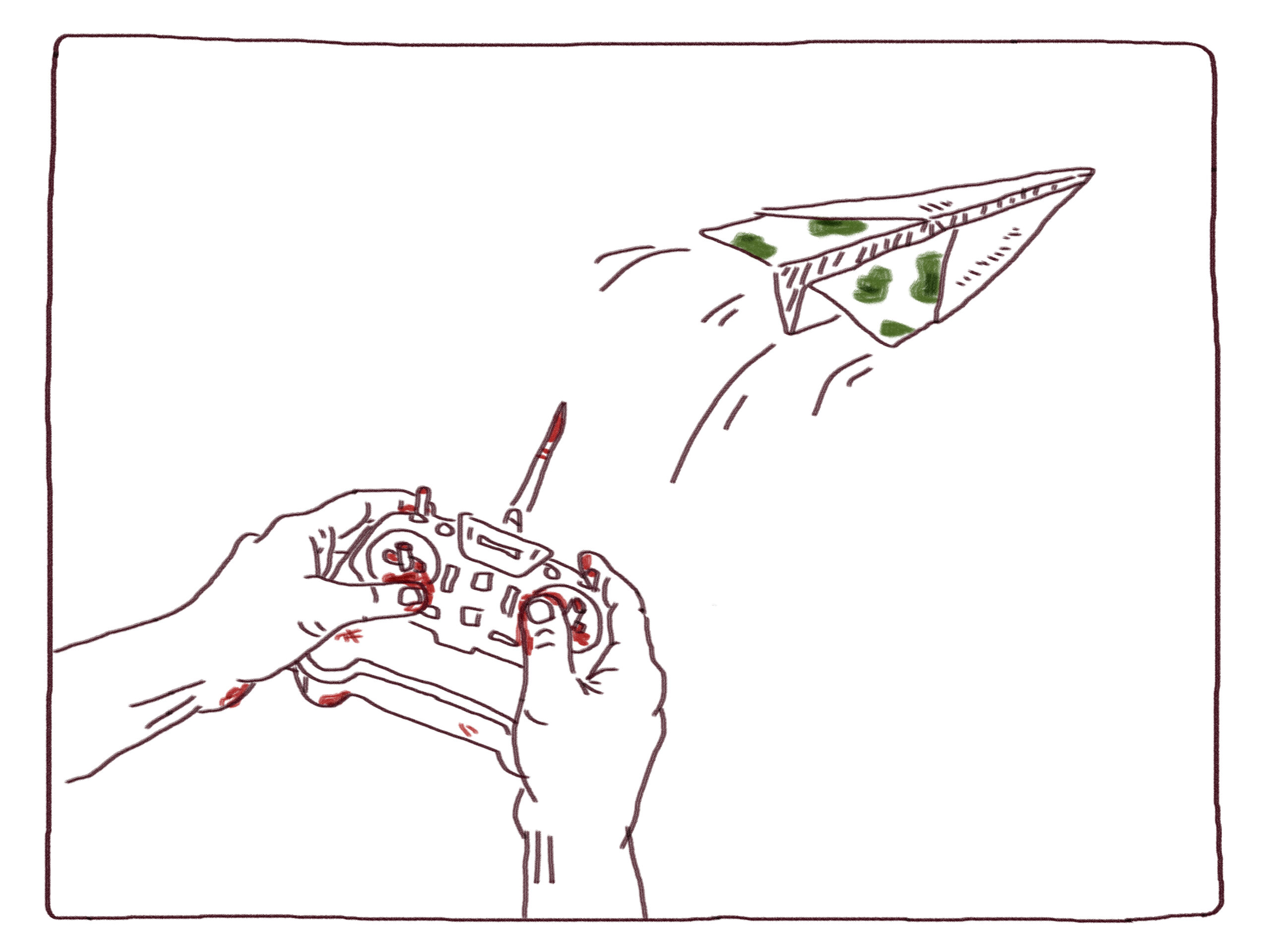
All artwork for the War Law Institute is custom-created by Alisha Yazdani. You can find her on Instagram here.

N. Waheed
N. Waheed is a lawyer with an interest in emerging tech and law.

 Camilo Ramírez Gutiérrez
 Zaki Khalid
 Anoshay Fazal
 Breshna Rani
 Alex Lawson


 Ayesha Malik