
 Syed Ali Zia Jaffery
Since time immemorial, actors, regardless of the type of system they find themselves in, have tried to coerce their enemies into submission. Coercion, which includes both deterrence and compellence, seeks to change an adversary’s behavior to one’s own advantage. While one might assume that states possessing more military strength can successfully coerce militarily weaker states, the literature tells a different story: military might does not guarantee successful coercion. This is especially true apropos of compellence.
There are several reasons why superior firepower does not always have the desired compellent effects. First, the magnitude of the coercer’s demand is too great. In other words, the coercer wants the target to make more concessions than it can provide. Second, as successful compellence requires the target to take an action or reverse an ongoing one, it is unlikely to give in out of fear of suffering reputational damage. Third, targets think that if they agree to one demand, coercers will become emboldened and will increase their demands.
Recent scholarship has delved into the problem associated with credible coercive assurance. Targets do not concede because they do not believe that coercers will stop punishing them once compliance is witnessed. Simply put, while targets have little doubts over threat credibility, they do believe that the coercers’ punishments are unconditional.
The Iran war and the lead up to it amply demonstrate how greater firepower doesn’t automatically translate into coercive success.
Ever since conditional punishments and their threats were replaced by a maximum pressure campaign, Iran has stood firm, refusing to comply with US demands. This is evidenced by Iran’s defiance under relentless US pressure ahead of last year’s 12-Day War. While the Trump administration was adamant that Iran stop uranium enrichment, Iran defended its rights as both a State Party to the Treaty on the Non-Proliferation of Nuclear Weapons (NPT) and a signatory to a safeguards agreement with the International Atomic Energy Agency.
The 12-Day War also failed to change Iran’s behavior. The country continued to vociferously defend its inalienable right to use nuclear energy for peaceful purposes.
Fast-forward to January 2026, Iran dealt with protestors, ignoring U.S. threats of invasion. It also maintained a tough stance during the February 2026 negotiations, which were sabotaged by the U.S. and Israel.
The U.S. and Israel have also been unable to coerce Iran during the ongoing war, which has temporarily halted as a result of a ceasefire. While all their objectives are primarily centered on bringing about regime change and state collapse, they have sought to coerce the current regime. These coercive demands include the opening of the all-important Strait of Hormuz, the dismantlement of safeguarded nuclear facilities, the curtailment of ballistic missiles, and severance of ties with regional allies. Despite suffering significantly in terms of civilians, leadership, and infrastructure, Iran held its ground, defiantly waging a war of attrition to good effect. This not only forced the U.S. to change its goalposts but also accept Iran’s 10-point proposal as a basis for negotiations.
Iran’s rejection of U.S. proposals is also a coercive failure, as the country was being coerced into accepting them.
Far from being coerced, Tehran replaced its martyred leaders with new, more hawkish ones. The Islamic Revolutionary Guard Corps continues to lead Iran’s military retaliatory effort, which is centered on a decentralized Mosaic Doctrine.
All of this has some invaluable lessons for Pakistan. First, while coercive success is becoming all the more difficult to achieve, adversaries still find it propitious to coerce other states. Pakistan’s enemies may, yet again, seek to exact compellence, not least because they believe that they have the tools to do so. They might misread and overestimate the coercive value of emerging and disruptive technologies, including but not limited to drones.
Second, the idea that Pakistan might be Israel’s next target cannot be simply dubbed a conspiracy theory. Israel has made no secret of its revanchist goals. It wants to destroy or emasculate countries so that they don’t pose any kind of threat to it. Therefore, Pakistan, a country that has successfully denied any kind of coercive success to a behemoth in India, must include this in its threat perception.
To obviate this threat, Pakistan must continue focusing on strengthening its conventional and nuclear deterrents, as well as invest in emerging and disruptive technologies with a view to integrating them in its military strategy. However, a robust military strategy should be seen as an important subset of an evolving grand strategy that seeks to position Pakistan as a key, stabilizing middle power.
Pakistan’s diplomatic engagements are already laying the groundwork for all this. By stepping forward and delivering an unlikely ceasefire, Pakistan is signaling that its balancing acts with global and regional powers could be leveraged to open new, hitherto closed diplomatic pathways to both crisis management and conflict resolution. By doing all of this, Pakistan can heighten the stakes for peace, denying space to spoilers and saboteurs. It must continue with this while making its deterrents more dynamic.
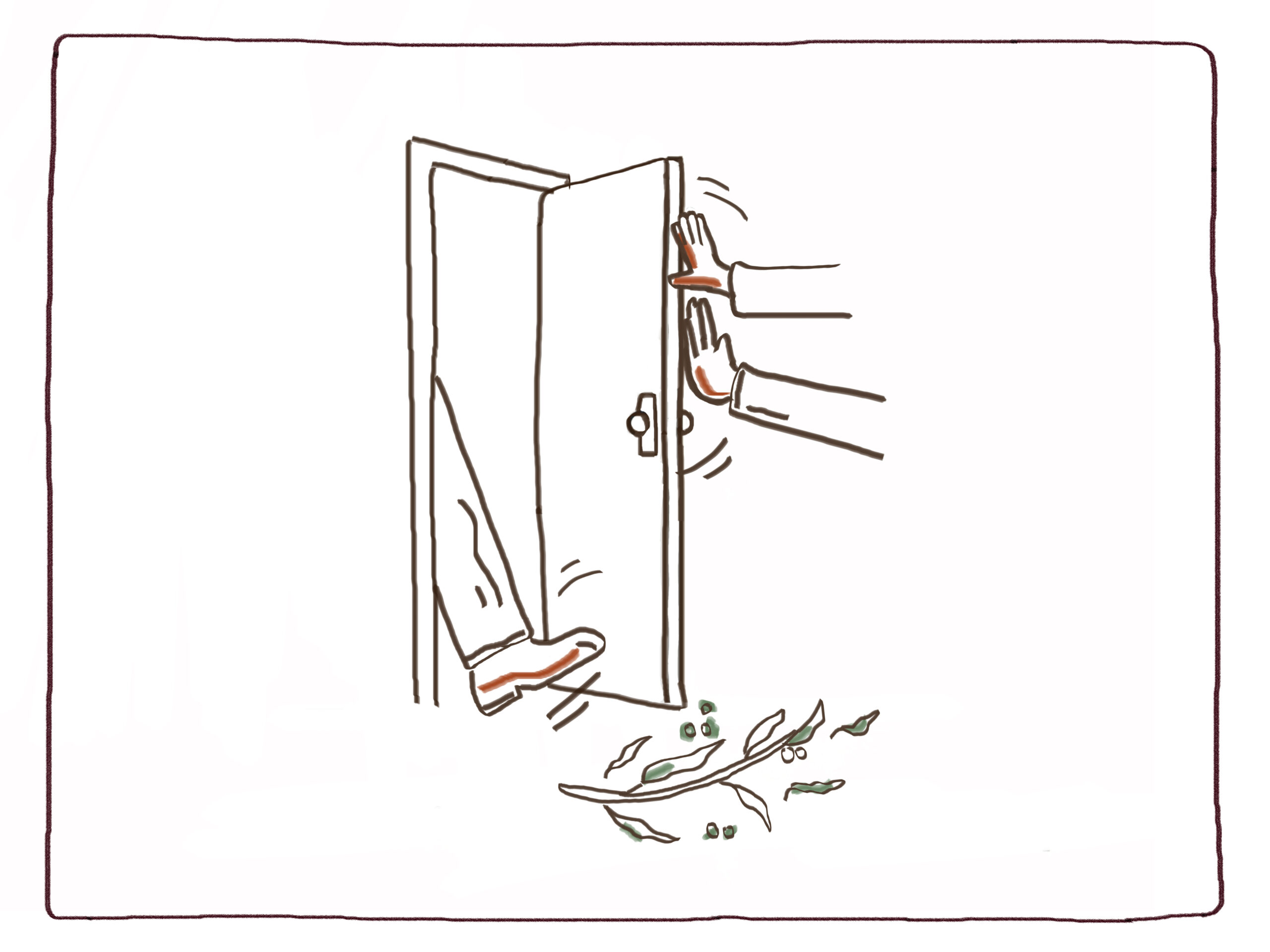
All artwork for the War Law Institute is custom-created by Alisha Yazdani. You can find her on Instagram here.

Syed Ali Zia Jaffery
Syed Ali Zia Jaffery is Deputy Director, Center for Security, Strategy and Policy Research, University of Lahore, and Associate Editor, Pakistan Politico Ali was a Visiting Fellow at the Stimson Center, Washington, D.C. Ali regularly writes on strategic issues for national and international publications, to include Bulletin of the Atomic Scientists, Routledge, South Asian Voices , The National Interest, The Atlantic Council, Asia-Pacific Leadership Network (APLN), CSIS, The Diplomat, Dawn, and 9DashLine, among others. Ali is an alumnus of Woodrow Wilson Center’s Nuclear Proliferation International History Project's Nuclear History Boot Camp. He is also an alumnus of the International School on Disarmament and Research on Conflicts( ISODARCO). Ali often shares his perspectives on major strategic developments on national and international media. Ali was associated with the British American Security Information Council (BASIC) both as part of its Programme on Nuclear Responsibilities and the Emerging Voices Network. His research interests lie in the fields of nuclear deterrence, strategic stability, and geopolitics. He taught undergraduate level courses on foreign policy, national security, arms control& disarmament, and non-proliferation from 2018 until 2023. He was also a Graduate Research Assistant at the James Martin Center for Nonproliferation Studies.

 Maarij Ali Tarar
 N. Waheed
 Zaki Khalid
 Camilo Ramírez Gutiérrez
 Breshna Rani
 Alex Lawson
 Ayesha Malik

